
Introduction
Lorsqu'on choisit de nouvelles fenêtres, une question revient souvent : à battants ou coulissantes ?
À première vue, la différence peut sembler essentiellement esthétique. Pourtant, le type de fenêtre que vous choisissez peut avoir une incidence bien au-delà de l'aspect visuel. La ventilation, l'efficacité énergétique, la sécurité, la résistance aux intempéries et même le niveau de bruit à l'intérieur sont autant de facteurs influencés par le système de fenêtres installé dans votre logement.
Parmi les options disponibles, la système de fenêtres à battants intégré s'est fait de plus en plus remarquer grâce à son alliance de performances et de fonctionnalité. Mais comment se compare-t-elle à une fenêtre coulissante traditionnelle ? Comprendre les différences en matière de conception, de fonctionnement et de performances à long terme peut grandement faciliter la prise de décision.
Dans cet article, nous allons comparer ces deux systèmes en nous appuyant sur les critères les plus importants, afin de vous aider à déterminer quelle solution est la mieux adaptée à votre espace, à votre budget et à votre mode de vie.
Qu'est-ce qu'un système de fenêtres à battants intégré, exactement ?
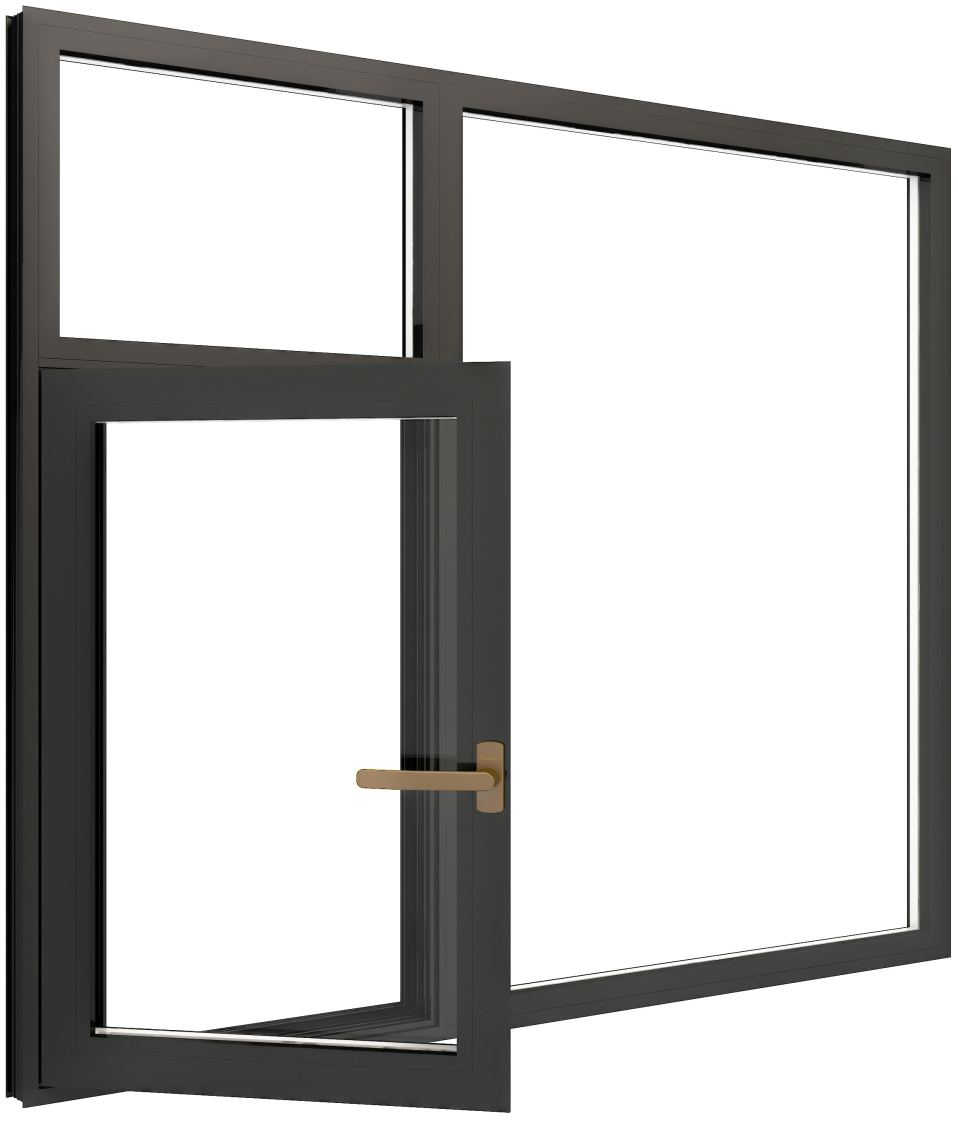
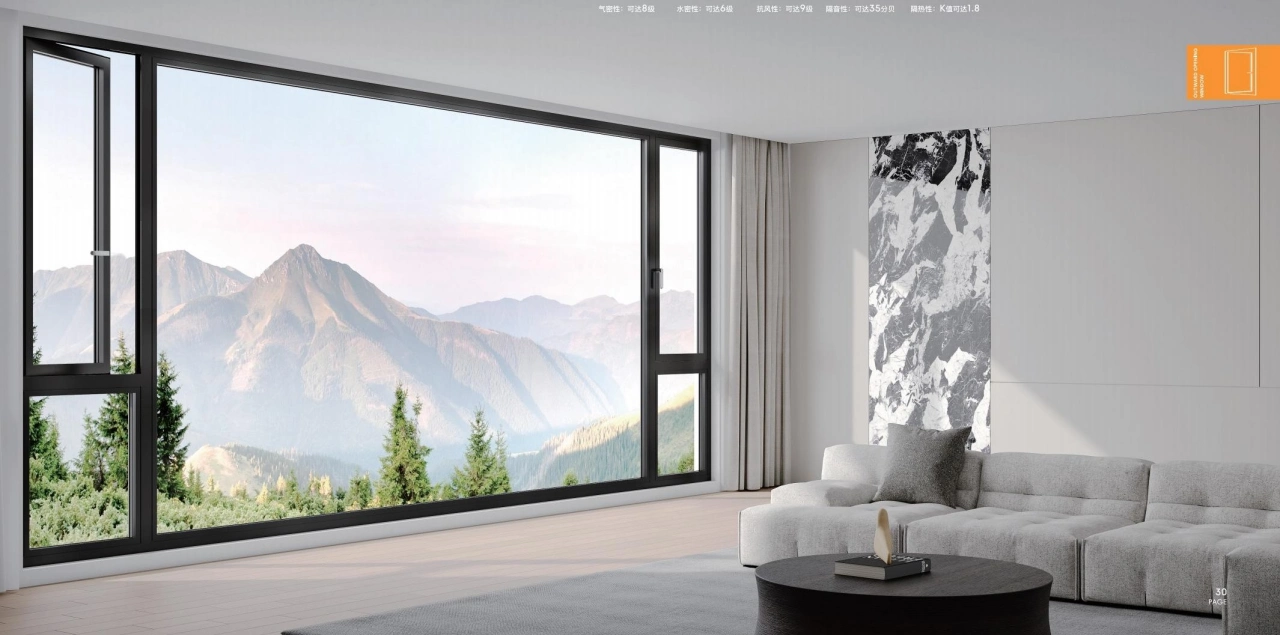
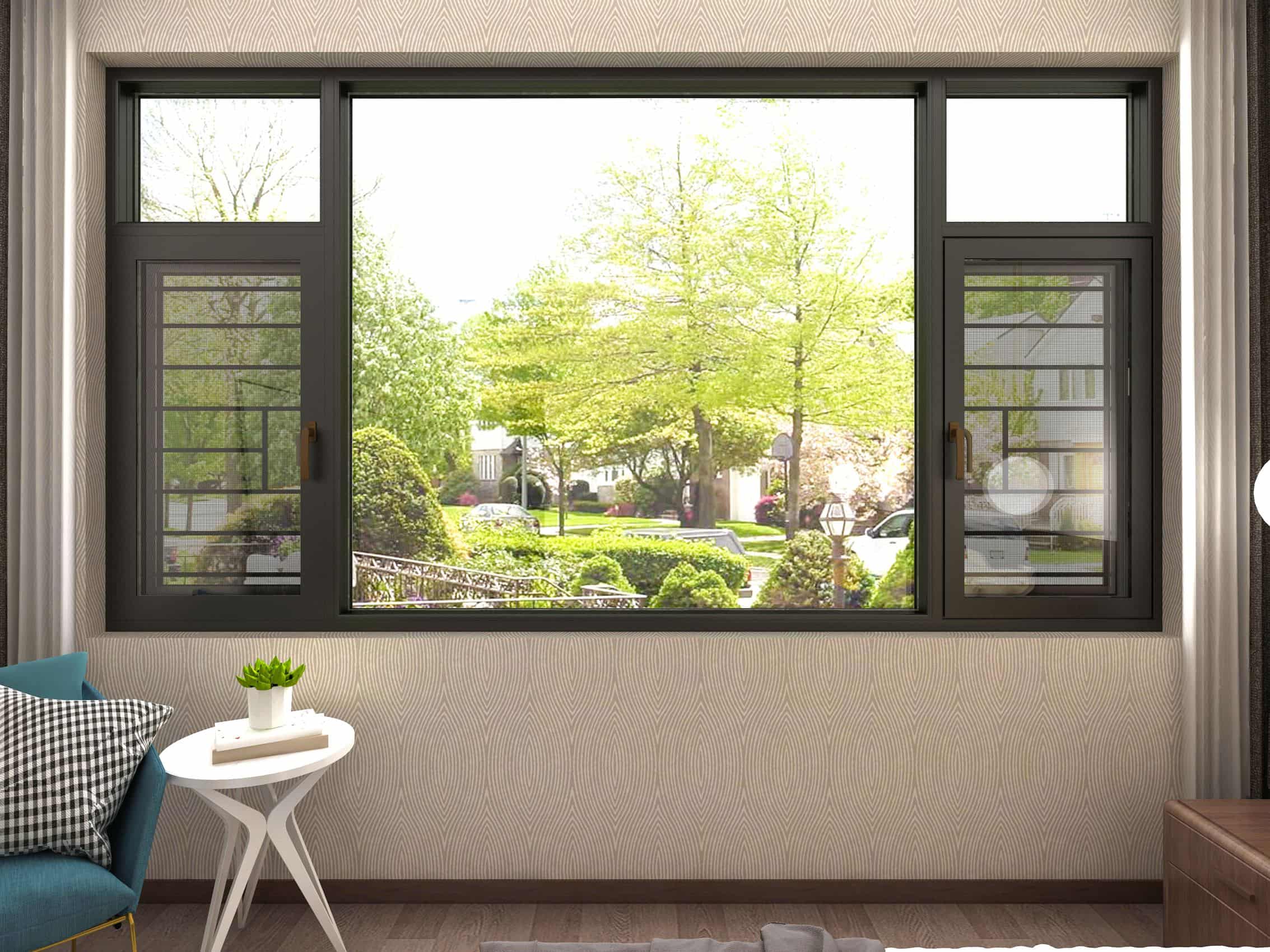
Avant de procéder à cette comparaison, précisons bien de quoi il s'agit. Un système de fenêtres à battants intégré Ce n'est pas simplement un nom sophistiqué pour désigner une fenêtre à battants classique. Il s'agit d'un ensemble complet et bien conçu, dans lequel chaque élément — le cadre, le châssis, la quincaillerie, la moustiquaire et, souvent, la barrière de sécurité — fonctionne en harmonie pour former un tout cohérent..
Comparez cela à une voiture de luxe et à une berline basique. Les deux vous permettent d’aller d’un point A à un point B. Mais l’une d’elles a été conçue pour que tous ses composants fonctionnent en parfaite harmonie, grâce à une ingénierie de précision et à un souci du détail que vous pouvez ressentir à chaque fois que vous l’utilisez.
La série 110 système de fenêtres à battants intégré, par exemple, propose deux niveaux : les éditions Standard et Premium. L'édition Standard offre une stabilité structurelle fiable et une fonctionnalité durable. L'édition Premium va encore plus loin avec des composants autolubrifiants, des revêtements anti-traces de doigts et même, en option, des capteurs intelligents pour la connectivité IoT.
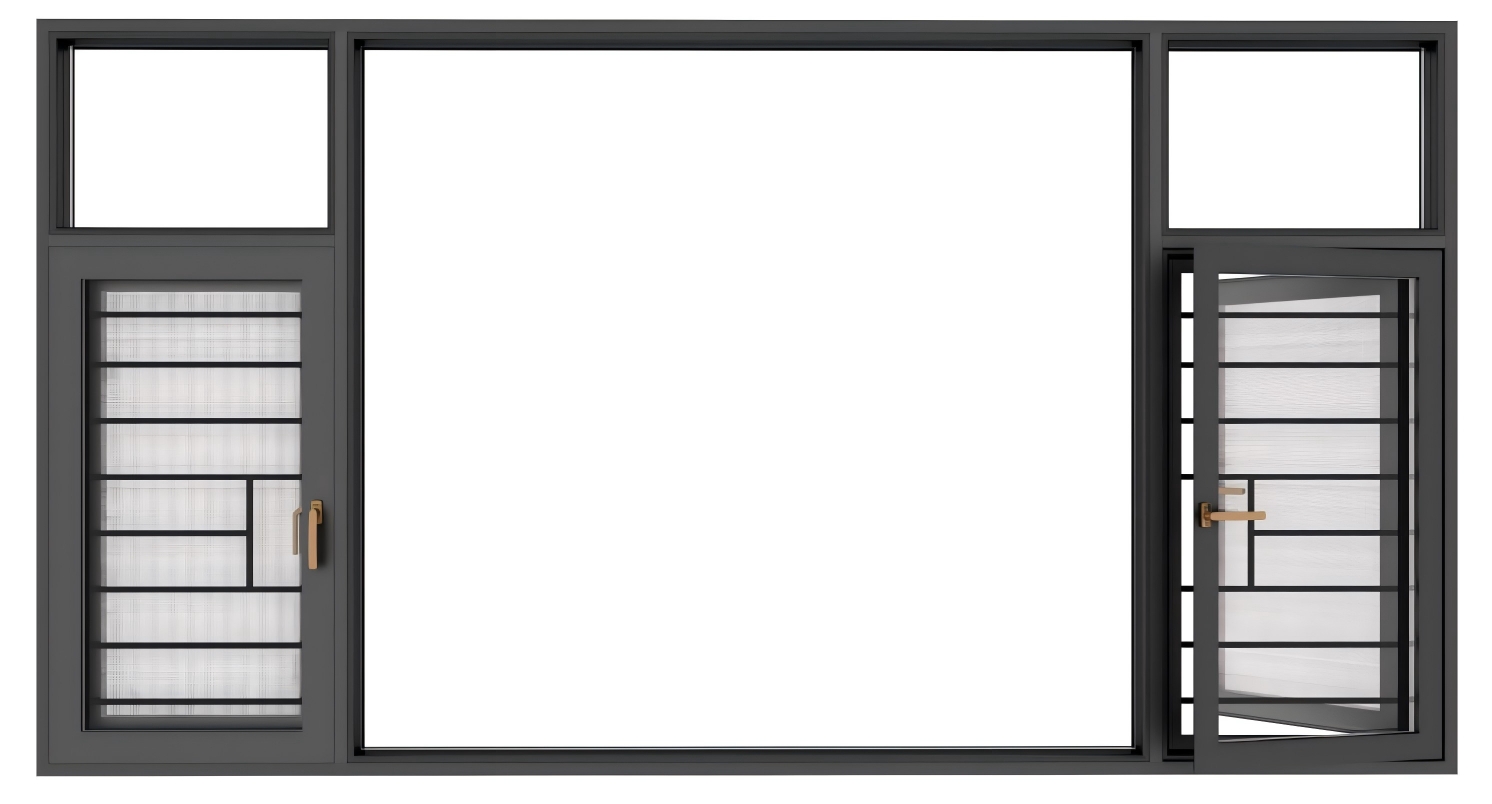
Voici quelques-unes des caractéristiques essentielles qui définissent un système moderne système de fenêtres à battants intégré:
Surfaces affleurantes avec évacuation dissimulée – Les cadres alignés au laser, dotés d'un système de drainage à 4 canaux dissimulé, empêchent l'accumulation d'eau tout en préservant une vue dégagée
Plusieurs modes d'ouverture – Ouverture oscillo-battante pour une micro-ventilation sécurisée, ouverture battante pour une circulation d'air maximale, et ouverture vers l'extérieur pour les climats pluvieux
Garde-corps de sécurité intégré – Des garde-corps en aluminium de qualité structurelle intégrés au châssis, pouvant supporter des charges allant jusqu’à 300 kg
Deux poignées surdimensionnées – Poignées en aluminium de qualité aéronautique sur les vantaux vitrés et les vantaux à grille, pour une ouverture fluide d'un seul doigt
Performances thermiques – Coefficients U réglables de 0,83 à 1,2 W/m²K, ce qui constitue une efficacité énergétique exceptionnelle
Maintenant que nous comprenons ce qu'est un système de fenêtres à battants intégré Compte tenu de ses atouts, comparons-le directement aux fenêtres coulissantes.
La différence fondamentale : le fonctionnement de chaque type de fenêtre
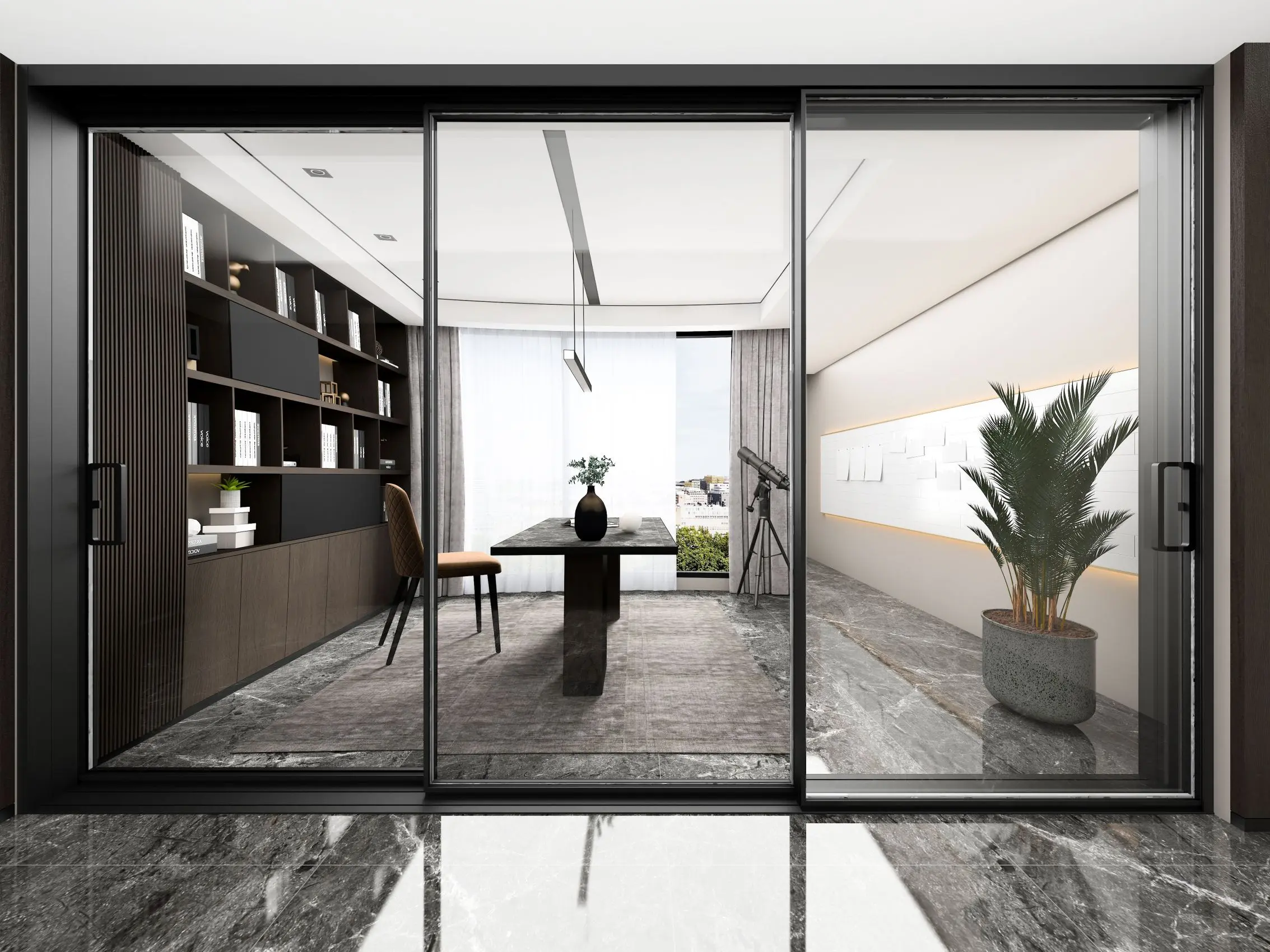
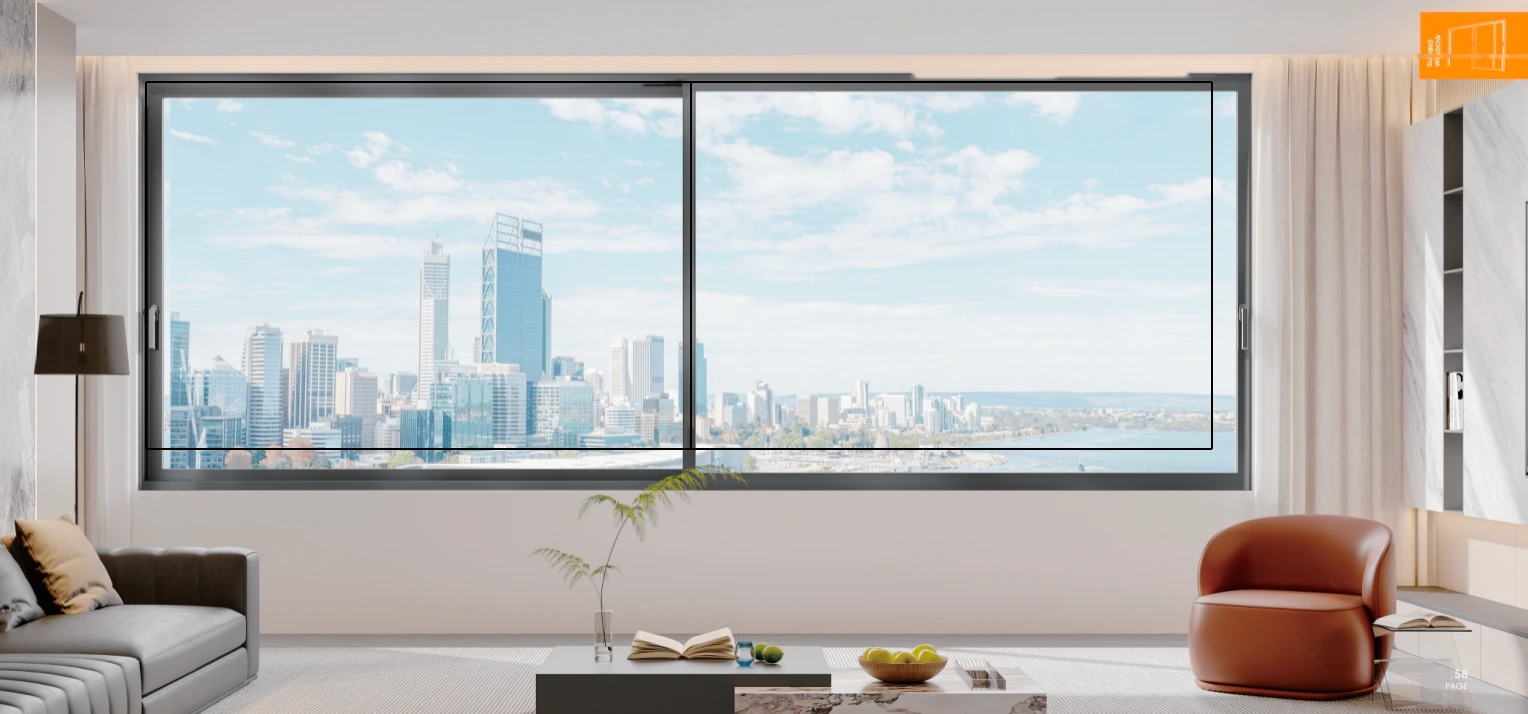
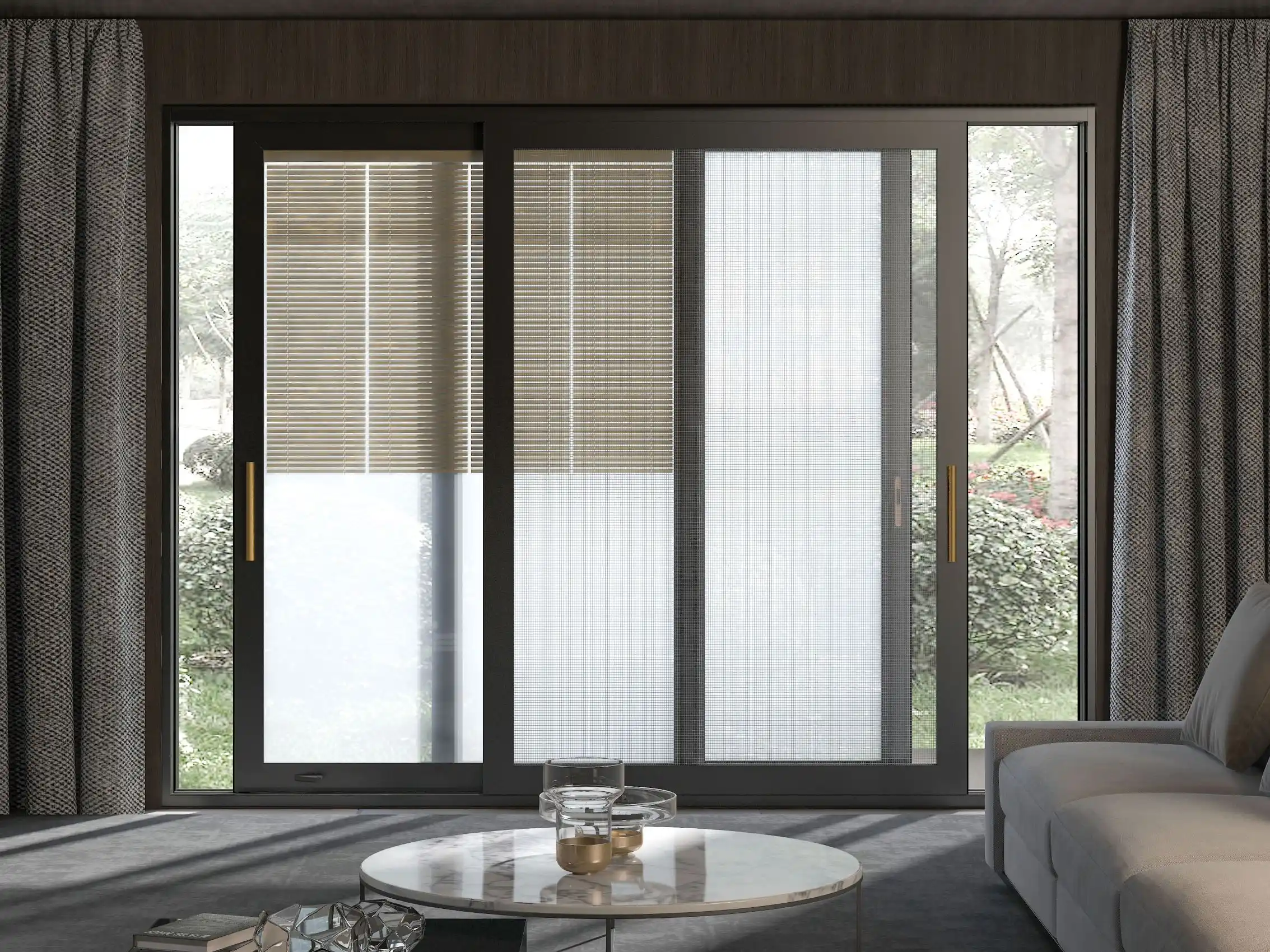
En gros, la différence réside simplement dans la façon dont la fenêtre s'ouvre.
| Aspect comparatif | Système de fenêtre à battant intégré | Fenêtre coulissante |
|---|---|---|
| Mécanisme d'ouverture | Articulé sur le côté, il pivote vers l'extérieur ou vers l'intérieur comme une porte | Se déplace horizontalement le long de rails |
| Méthode d'étanchéité | Joint de compression – le vantail s'appuie fermement contre le châssis | Joints à brosse ou à ailette : le mécanisme coulissant entraîne inévitablement l'apparition d'interstices |
| Fuites d'air | Le plus bas parmi les fenêtres ouvrables | Taux de fuites d'air plus élevés |
| Encombrement | Il faut un espace suffisant pour que le châssis puisse s'ouvrir. | Pas besoin d'espace de manœuvre – idéal pour les endroits exigus |
| Ventilation | Ouverture totale – jusqu’à 100% de la surface vitrée | Un seul vantail est mobile – généralement le modèle 50% pour une ventilation maximale |
| Complexité matérielle | D'autres pièces mécaniques (charnières, entretoises, manivelles) | Simpler – rails et rouleaux |
| Coût habituel | Un investissement initial plus élevé | Plus abordable |
Ce tableau présente les faits bruts. Mais la vraie question est la suivante : Que signifient ces différences pour vous, chez vous, compte tenu de vos besoins spécifiques ?
Étanchéité et efficacité énergétique : les atouts du système intégré de fenêtres à battants
Voici la principale raison pour laquelle un système de fenêtres à battants intégré est plus performant que les curseurs : le sceau.
Les fenêtres à battants sont équipées de joints à compression. Lorsque vous fermez la fenêtre, le battant s'appuie fermement contre le cadre, ce qui comprime un joint en caoutchouc ou en EPDM.. Cela crée une barrière étanche à l'air. Les fenêtres coulissantes, en revanche, reposent sur des brosses d'étanchéité ou des joints à ailettes qui glissent les uns contre les autres. Même s'ils sont très bien conçus, il y aura toujours un petit espace au niveau de la jonction entre les vantaux.
Les chiffres le confirment. Des études montrent que les fenêtres à battants « surpassent de loin les fenêtres coulissantes et à guillotine » en termes de performances mesurées.. Les fenêtres à battants présentent généralement des taux de fuites d'air inférieurs à ceux des fenêtres coulissantes, car le vantail se ferme en s'appuyant contre le cadre.
Quelles sont les conséquences pour votre logement ?
- Des factures d'énergie moins élevées
En hiver, l'air chaud reste à l'intérieur. En été, l'air frais ne s'échappe pas. Votre système de chauffage, de ventilation et de climatisation fonctionne moins. Une source souligne que l'étanchéité supérieure des fenêtres à battants en fait « un choix judicieux si vous souhaitez garder votre logement au frais sans surcharger votre climatisation ».. Et même si les fenêtres à battants représentent un investissement initial plus élevé, « les économies d'énergie et leurs performances en matière de ventilation peuvent s'avérer rentables à long terme ».
- Une meilleure isolation phonique
Cette étanchéité parfaite bloque également les bruits extérieurs. Si vous habitez dans une rue très fréquentée ou à proximité d'une autoroute, la différence est perceptible.
- Moins de poussière et de pollen
Ces minuscules interstices dans les fenêtres coulissantes ? Ils ne laissent pas seulement passer l'air. La poussière, le pollen et les polluants extérieurs s'y faufilent également. Un système de fenêtres à battants intégré Grâce à son joint de compression, il empêche une grande partie de ces éléments de pénétrer à l'intérieur, là où ils n'ont pas leur place.
La série 110 système de fenêtres à battants intégré va encore plus loin avec des coefficients U réglables compris entre 0,83 et 1,2 W/m²K. Pour replacer les choses dans leur contexte, plus la valeur U est faible, meilleure est l'isolation. Une valeur U de 1,0 W/m²K est considérée comme un excellent niveau d'efficacité énergétique pour les fenêtres. Ce système respecte et dépasse cette référence.
Ventilation et circulation de l'air : quelle fenêtre offre la meilleure aération ?
Si vous aimez l'air frais, le système de fenêtres à battants intégré remporte également ce round.
Une fenêtre coulissante comporte généralement un seul vantail mobile. Même lorsqu'elle est entièrement ouverte, seule la moitié environ de la surface de la fenêtre est réellement disponible pour la circulation de l'air.. L'autre moitié reste recouverte par le châssis fixe.
Une fenêtre à battants s'ouvre entièrement. Toute la surface vitrée se transforme alors en ouverture.. Vous bénéficiez d'une ventilation optimale, pouvant atteindre 100% de la surface de la fenêtre. Lors d'une chaude journée d'été, cette différence se ressent vraiment.
Mais c'est là qu'un système de fenêtres à battants intégré c'est là qu'on entre dans le vif du sujet. La série 110 propose trois modes d'ouverture:
Ouverture oscillo-battante (vers l'intérieur) – La fenêtre s'ouvre par basculement vers le haut, ce qui permet une micro-ventilation sécurisée. C'est la solution idéale lorsque vous souhaitez faire entrer de l'air frais sans pour autant laisser la fenêtre entièrement ouverte — parfait pour la sécurité, la protection des enfants ou les jours de pluie.
Ouverture latérale (vers l'extérieur) – Le mode classique à ouverture totale pour un débit d'air maximal quand vous le souhaitez.
Inclinaison vers l'extérieur – Une solution à inclinaison vers le haut spécialement conçue pour les climats pluvieux. Elle allie circulation d'air et protection contre les intempéries, ce qui vous permet de bénéficier d'une ventilation même en cas de bruine.
Aucune fenêtre coulissante ne peut rivaliser avec cette flexibilité. Une fenêtre coulissante n’offre qu’un seul mode d’ouverture. Une fenêtre de qualité en propose trois. système de fenêtres à battants intégré.
Contraintes d'espace : quand les fenêtres coulissantes restent une solution judicieuse
Mais venons-en aux faits. Les fenêtres coulissantes ne sont pas si mauvaises que ça. Elles présentent un avantage majeur qui leur permet de rester d'actualité : ils n'ont pas besoin d'espaces de transition.
Une fenêtre à battants s'ouvre vers l'extérieur (ou vers l'intérieur). Cela signifie qu'il faut prévoir un espace libre à l'extérieur : pas de buissons, pas d'allées, pas de murs voisins qui pourraient gêner l'ouverture.. Si vous installez une fenêtre sur un balcon étroit, au-dessus d'une allée ou dans un environnement urbain exigu où l'espace extérieur est limité, une fenêtre coulissante pourrait être votre seule option pratique.
Les fenêtres coulissantes sont également généralement plus faciles à manipuler. Elles glissent en douceur le long de leurs rails.. Pas de manivelles ni de charnières à entretenir. Pour les grandes fenêtres ou les endroits difficiles d'accès, cela peut constituer un véritable avantage.
Et n'oublions pas le coût. Les fenêtres coulissantes sont généralement plus abordables.. Leur conception plus simple permet de réduire les coûts de fabrication. Si votre budget est serré ou si vous remplacez plusieurs fenêtres à la fois, la différence de prix finit par peser lourd.
Mais voilà le hic : on en a pour son argent. Ces économies s'accompagnent toutefois de compromis en matière d'efficacité énergétique, d'étanchéité et de performances à long terme.
Sécurité : quelle fenêtre vous offre la meilleure protection ?
C'est là qu'un système de fenêtres à battants intégré prend une avance considérable.
Les fenêtres à battants sont généralement équipées de systèmes de verrouillage multipoints.. Lorsque vous fermez la fenêtre, les verrous s'enclenchent à plusieurs endroits le long du cadre. Il est ainsi beaucoup plus difficile de la forcer de l'extérieur.
Les fenêtres coulissantes, en revanche, sont généralement équipées de simples loquets ou de verrous en applique.. Un intrus déterminé peut parfois faire sortir un vantail coulissant de son rail ou utiliser un pied-de-biche pour forcer la serrure.
Mais un système de fenêtres à battants intégré offre encore plus.
La série 110 comprend un garde-corps de sécurité mobile— des garde-corps en aluminium de qualité structurelle intégrés au châssis, pouvant supporter des charges allant jusqu’à 300 kg. Il ne s'agit pas seulement de se protéger contre les intrus. Il s'agit aussi de prévention des chutes, ce qui est particulièrement important dans les immeubles de grande hauteur ou les logements où vivent de jeunes enfants.
Et puis il y a le grille de protection en fil d'acier inoxydable. Contrairement aux grillages classiques en fibre de verre ou en nylon, qui peuvent être découpés à l'aide d'un cutter, les grillages en fil d'acier inoxydable offrent une véritable résistance aux coupures et aux effractions. Ils sont également plus résistants et durent plus longtemps.
Certains systèmes de fenêtres à battants intégrés proposent également des verrous de sécurité pour enfants de qualité professionnelle. C'est un détail qui a son importance si vous avez de jeunes enfants à la maison.
Durabilité et entretien : une perspective à long terme
Parlons de ce qui se passera dans cinq ou dix ans.
Fenêtres coulissantes disposent d'un mécanisme plus simple : des rails et des rouleaux. Quand un problème survient, c'est généralement parce que les rouleaux sont usés ou que les rails sont obstrués par des débris. Il s'agit là de réparations relativement simples. Cependant, avec le temps, les rails peuvent accumuler de la saleté et des impuretés, ce qui rend la vitre plus difficile à faire coulisser. Et une fois que le joint d'étanchéité est usé, son remplacement peut s'avérer délicat, car il est intégré au mécanisme de coulissement.
Fenêtres à battants comportent davantage de pièces mobiles : charnières, tringles et, souvent, manivelles. Ceux-ci nécessitent une lubrification périodique. Mais comme le mécanisme est plus robuste et fabriqué avec des matériaux de meilleure qualité, un modèle de bonne facture système de fenêtres à battants intégré peut en fait durer plus longtemps qu'un curseur.
La série 110 répond à ce besoin grâce à Nouveautés de l'édition Premium, notamment des composants autolubrifiants et des revêtements anti-traces de doigts. Ce ne sont pas des gadgets, mais des solutions pratiques aux problèmes d'entretien courants.
Un détail souvent négligé : nettoyage. Le nettoyage de la face extérieure du vantail fixe des fenêtres coulissantes peut s'avérer fastidieux, en particulier aux étages supérieurs. Les fenêtres à battants, notamment celles dotées d'un système d'ouverture par basculement vers l'intérieur, vous permettent de nettoyer les deux faces de la vitre depuis l'intérieur de votre logement. La série 110 » pose de vitrages dès le début des travaux Cela permet également au verre d'affleurer les surfaces extérieures, ce qui réduit les accumulations de saleté et facilite le nettoyage.
L'avantage de l'écran intégré : une véritable révolution
La plupart des gens ne pensent pas à la moustiquaire lorsqu’ils comparent des fenêtres. Pourtant, ils devraient.
Les fenêtres coulissantes traditionnelles sont équipées de vantaux qui coulissent indépendamment les uns des autres. Ils se déforment, sortent de leurs rails et ne semblent jamais s'ajuster parfaitement contre le cadre.
Un système de fenêtres à battants intégré Cela change la donne. L'écran est intégré au système en tant que composant permanent et spécialement conçu.. La série 110, par exemple, est dotée d'un grille de protection en fil d'acier inoxydable cela fait partie de la conception intégrée.
Qu'est-ce que cela signifie pour vous ?
Une meilleure protection contre les insectes – La moustiquaire est parfaitement ajustée au cadre, ce qui empêche les insectes de s'infiltrer par les interstices.
Une plus grande durabilité – Le fil d'acier inoxydable ne se déchire pas, ne rouille pas et ne se détériore pas comme la fibre de verre.
Sécurité renforcée – Un treillis en acier inoxydable est beaucoup plus difficile à découper qu’un treillis standard.
Nettoyage plus facile – La conception intégrée permet souvent de nettoyer l'écran depuis l'intérieur.
Une esthétique plus épurée – Pas de cadre d'écran encombrant ou dépareillé qui gâcherait l'esthétique de la fenêtre.
Cette intégration est l'une des principales raisons pour lesquelles un système de fenêtres à battants intégré on a l'impression d'un produit plus haut de gamme et mieux fini.
Adaptabilité climatique : conçu pour votre région
Toutes les fenêtres ne sont pas adaptées à tous les climats. Une système de fenêtres à battants intégré offre quelque chose que la plupart des glissières ne peuvent pas offrir : personnalisation adaptée à votre environnement spécifique.
La série 110 système de fenêtres à battants intégré comporte 12 paramètres configurables:
Performances thermiques – Coefficients U réglables de 0,83 à 1,2 W/m²K
Profilés de vitrage – Rainures en V ou en escalier pour une meilleure compression
Systèmes de perles – Fixation par encliquetage pour plus de praticité ou par vis pour une sécurité maximale
Assemblage d'angle – Assemblages par sertissage à rupture thermique ou angles soudés renforcés
Le système comporte également des rainures usinées avec précision le long des cadres extérieurs qui perturbent les courants d'air, réduisant ainsi les différences de pression jusqu'à 22% en cas de tempête (testé à des vitesses de vent de 150 km/h).. Ce n'est pas du jargon marketing : c'est une véritable ingénierie adaptée aux environnements soumis à des vents violents.
Que vous vous trouviez dans une région côtière humide, en milieu alpin ou quelque part entre les deux, le système peut être adapté à votre climat spécifique..
Les fenêtres coulissantes ? Elles n'existent qu'en un seul modèle. Il faut prendre ce qu'il y a.
En toute franchise : lequel choisir ?
Après tout ça, voici mon avis en toute sincérité.
Optez pour un système de fenêtres à battants intégré si :
L'efficacité énergétique est une priorité pour vous
Vous souhaitez bénéficier de la meilleure étanchéité possible contre l'air, l'eau et le bruit
Vous disposez d'un espace extérieur suffisant pour permettre au châssis de s'ouvrir en battant.
Vous accordez de l'importance à la sécurité et souhaitez disposer d'un système de verrouillage multipoints et de grilles en acier inoxydable
Vous êtes prêt à investir davantage dès le départ pour obtenir des performances à long terme
Vous souhaitez disposer d'options de ventilation flexibles (basculement, pivotement, ouverture totale)
Optez pour une fenêtre coulissante si :
Vous disposez d'un espace extérieur très restreint (balcon étroit, situé au-dessus d'une allée)
Vous disposez d'un budget limité
Il vous faut une fenêtre simple et pratique, nécessitant un entretien minimal
L'efficacité énergétique et l'étanchéité ne sont pas vos principales préoccupations
En résumé : Un système intégré de fenêtres à battants est objectivement supérieur dans presque toutes les catégories de performances.—étanchéité, efficacité énergétique, ventilation, sécurité et durabilité. Les seules raisons de choisir une fenêtre coulissante sont le manque d'espace et le coût.
Et franchement ? Même l'argument du coût perd de son poids. Les économies d'énergie réalisées grâce à un système de fenêtres à battants haute performance peuvent, à terme, compenser le coût initial plus élevé.. Vous ne dépensez pas plus : vous investissez pour réduire vos factures d'énergie pendant de nombreuses années.
Guide pratique : Fenêtres à battants intégrées ou coulissantes ?
| Fonctionnalité | Système de fenêtre à battant intégré | Fenêtre coulissante |
|---|---|---|
| Efficacité énergétique | Excellent – étanchéité par compression, faibles coefficients U | C'est bien, mais certaines lacunes nuisent à l'efficacité |
| Fuites d'air | Le plus bas parmi les fenêtres ouvrables | Taux de fuite plus élevés |
| Ventilation | Ouverture complète (100%) | Ouverture partielle (~50%) |
| Sécurité | Serrures multipoints + grille en acier inoxydable | Les serrures basiques sont plus faciles à forcer |
| Espace requis | Nécessite un espace libre pour le balancement | Aucun local provisoire n'est nécessaire |
| Réduction du bruit | Excellent – l'étanchéité parfaite bloque le bruit | Modéré – des interstices laissent passer le bruit |
| Écran | Intégré, résistant, sécurisé | Distincts, plus fragiles, susceptibles de s'abîmer |
| Maintenance | Lubrification périodique des pièces mécaniques | Nettoyage des chenilles, remplacement des rouleaux |
| Coût | Des coûts initiaux plus élevés, mais des coûts à long terme moins élevés | Coûts initiaux moins élevés, coûts énergétiques plus élevés |
| Capacité d'adaptation au changement climatique | Très personnalisable | Une solution unique pour tous |
Conclusion
Si les fenêtres coulissantes restent une solution pratique pour les espaces restreints, elles impliquent souvent des compromis en matière de ventilation, d'étanchéité et d'efficacité énergétique.
Pour les propriétaires et les promoteurs immobiliers à la recherche d'une meilleure isolation thermique, d'une sécurité renforcée, d'une meilleure circulation de l'air et d'une durabilité à long terme, un système intégré de fenêtres à battants constitue généralement le choix le plus judicieux. Son joint de compression, son verrouillage multipoints et sa moustiquaire intégrée offrent des avantages en termes de performances que les fenêtres coulissantes traditionnelles peinent à égaler.
Le choix de la solution la plus adaptée dépend en fin de compte des exigences de votre projet, des conditions climatiques et de votre budget. Si vous étudiez différentes options de fenêtres pour un projet résidentiel ou commercial, consulter un fabricant expérimenté peut vous aider à identifier la configuration la plus adaptée. Des systèmes tels que le système de fenêtres à battants intégrées de la série 110 offrent une gamme de modes d’ouverture, d’options de moustiquaires et de caractéristiques techniques permettant de répondre à différents besoins architecturaux et environnementaux. N’hésitez pas à nous contacter si vous avez des questions.