
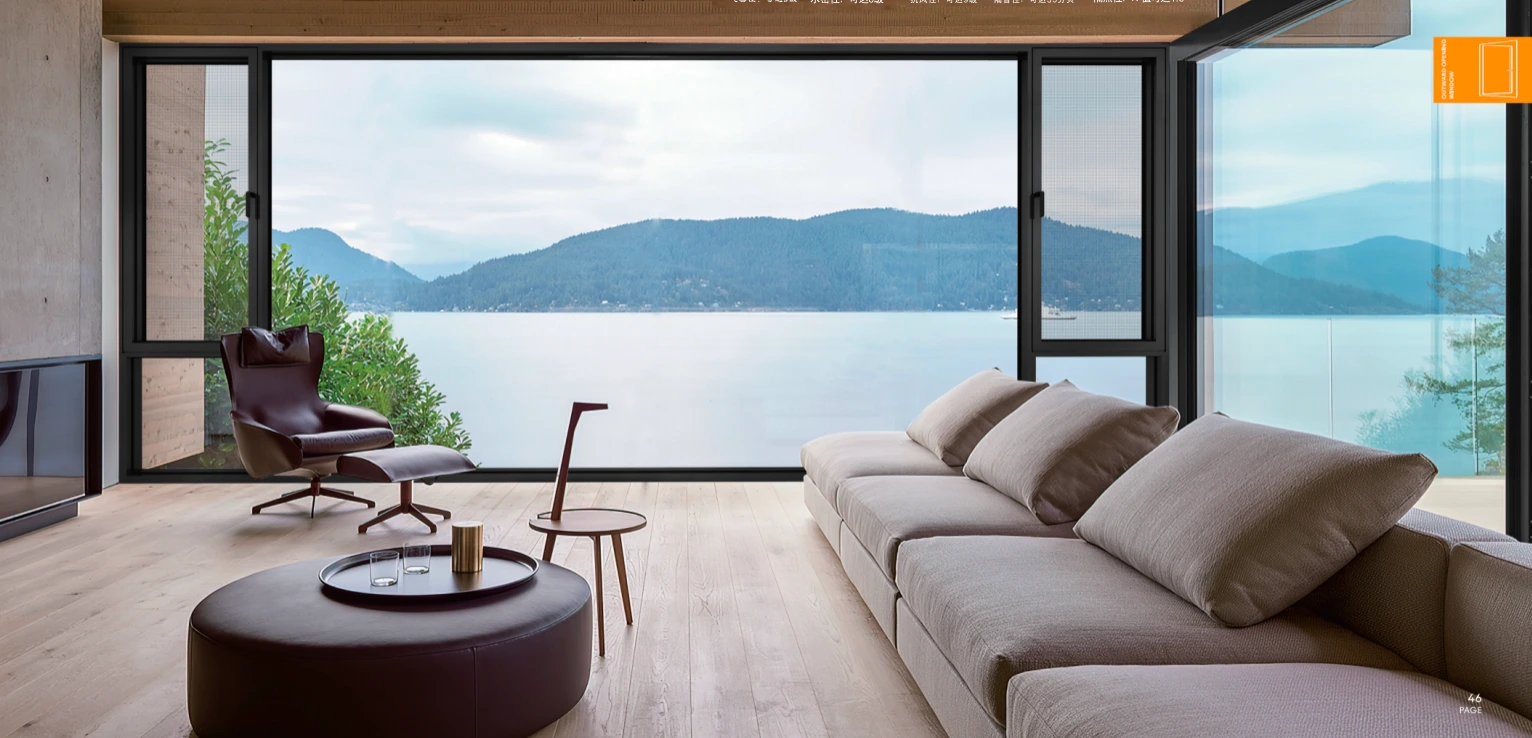
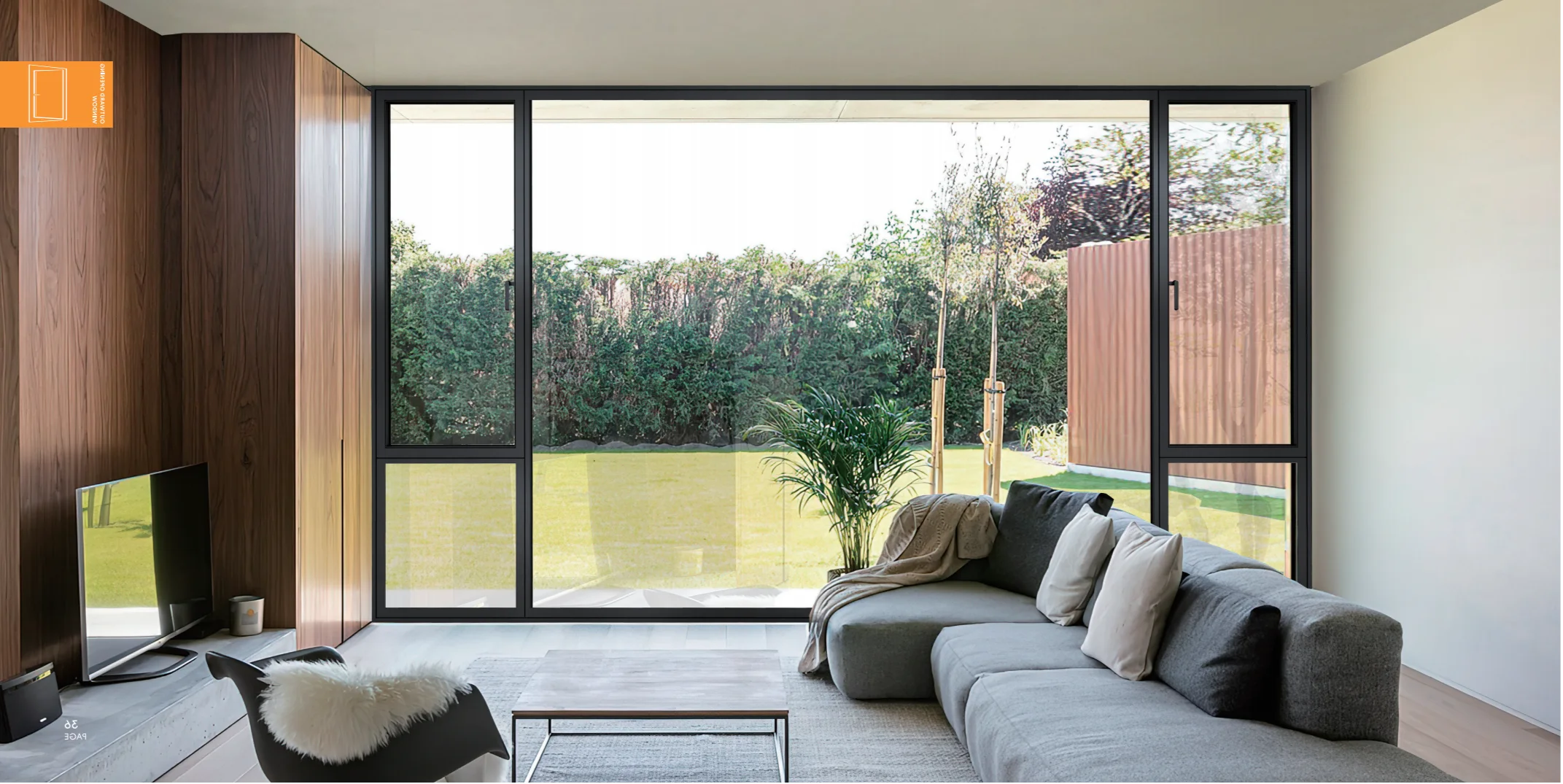
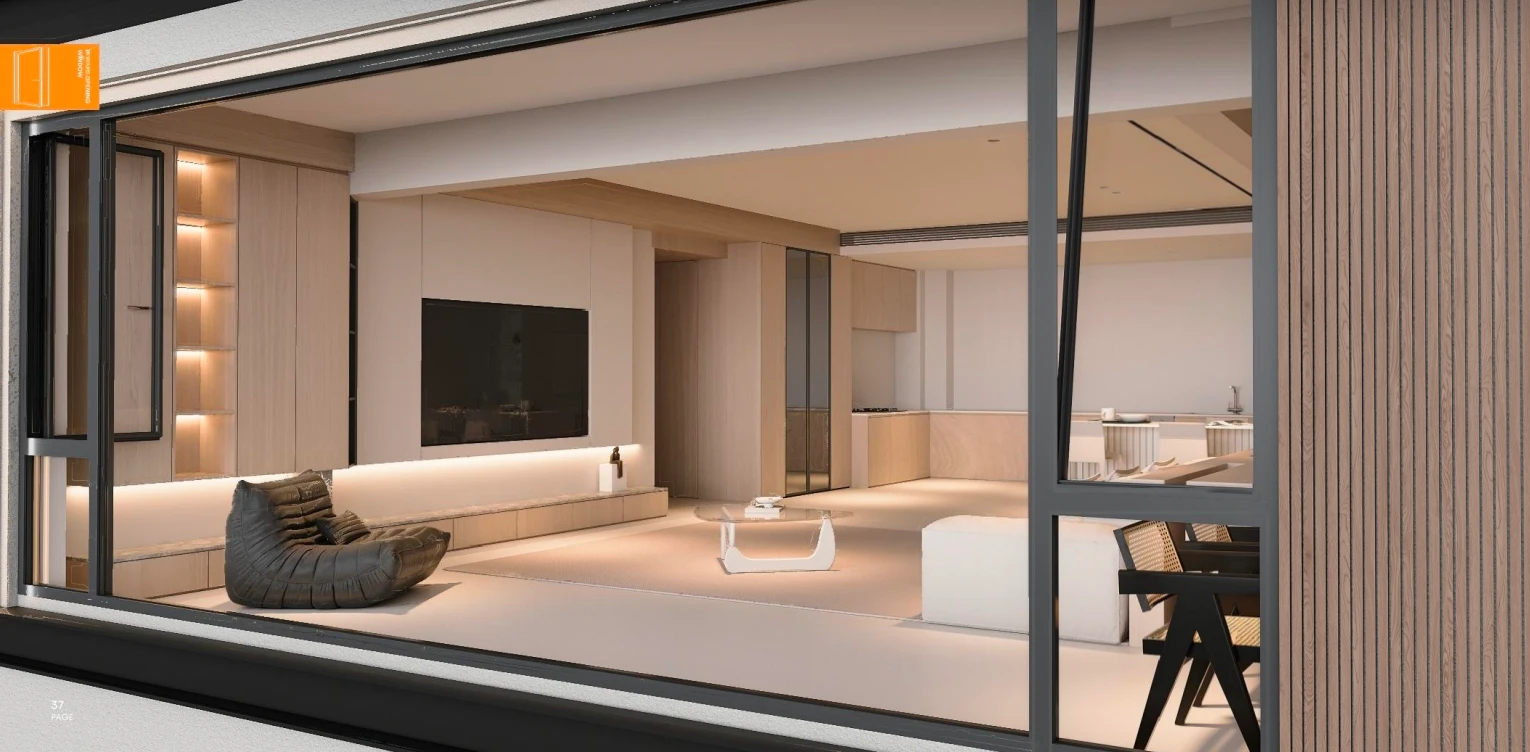
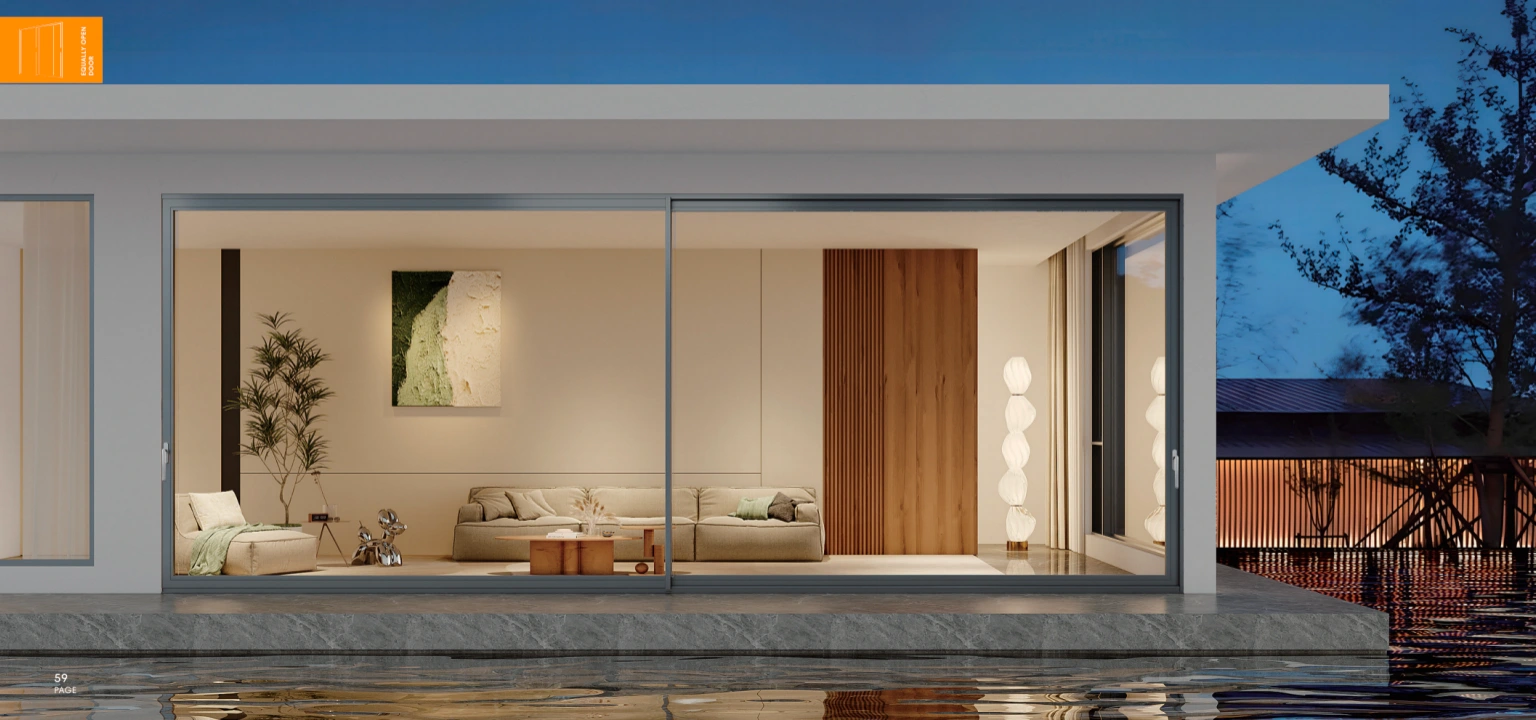
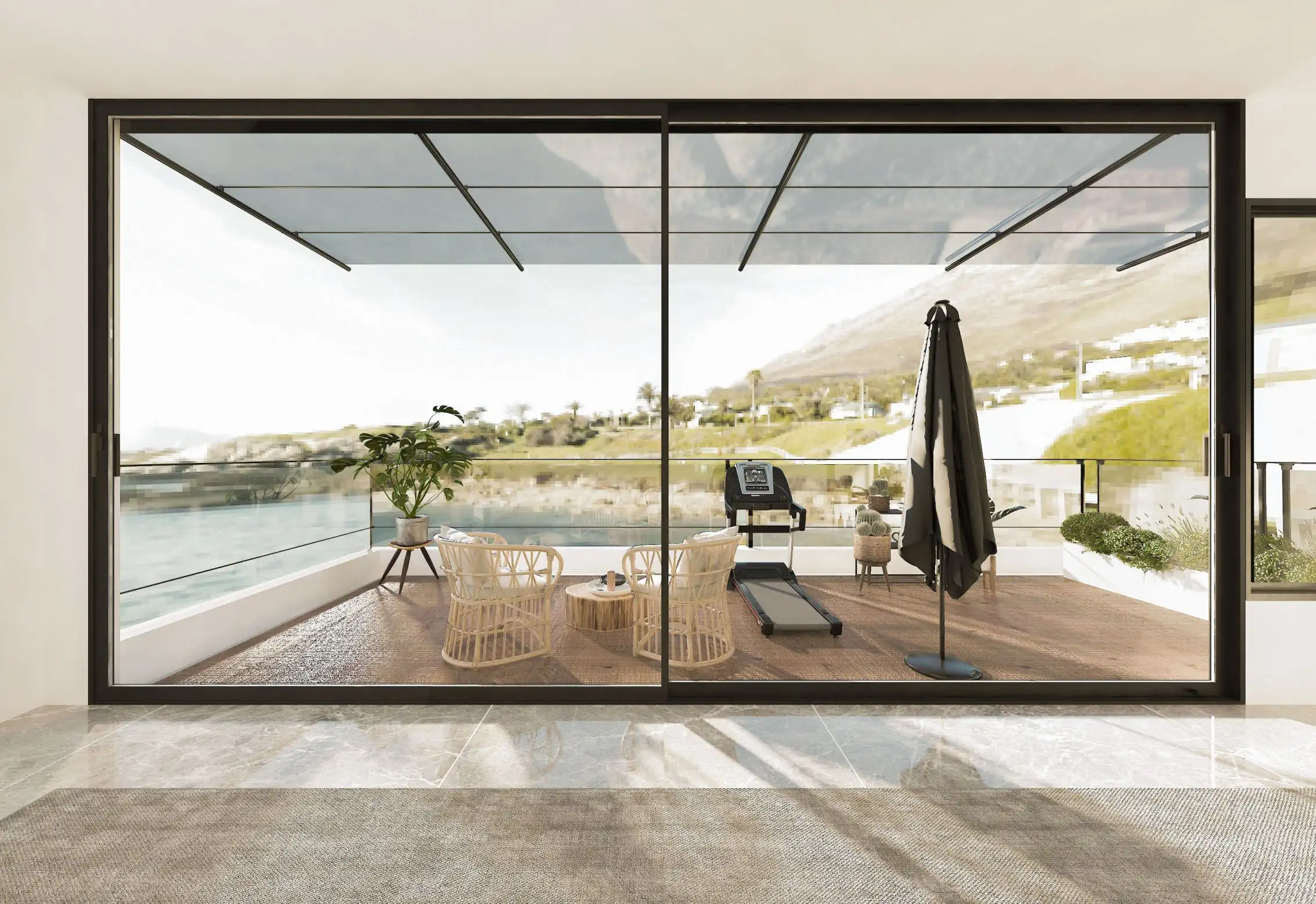
Coastal homes occupy a unique position in residential architecture. They are designed to open toward the landscape, invite light and air, and dissolve the boundary between interior living space and the outdoors. Large openings, floor-to-ceiling glazing, and sliding windows are almost unavoidable choices when the goal is to frame ocean views rather than confine them.
Yet the coastal environment is also the most unforgiving context for window systems. Salt-laden air accelerates corrosion. High humidity stresses seals year-round. Wind-driven rain behaves very differently from rainfall assumed in standard testing. Storms impose sustained pressure rather than brief loads, and in exposed locations, wind acts not as an occasional event but as a constant design condition.
In this environment, sliding windows are often the first building component to reveal weaknesses. The long-term performance difference between two-track sliding systems and Three-Track Sliding Windows becomes not a matter of preference, but of engineering reality. While both systems share the same basic sliding principle, they respond very differently to coastal stress over time, weather, and repeated loading.
Coastal Stress Is Not “Extreme Weather” — It Is Daily Weather
One of the most common mistakes in window selection for coastal homes is treating storms as rare events. In reality, coastal exposure is cumulative. Even on calm days, salt particles settle into tracks and hardware. Humidity remains high even when temperatures are mild. Wind applies low but constant pressure, flexing frames and sashes over thousands of cycles.
Sliding windows are particularly sensitive to this environment because they rely on precise tolerances. Smooth movement requires clearance. Effective sealing requires compression. Drainage requires space and slope. When these requirements compete within a limited frame depth, compromises are inevitable.
This is the context in which the two-track versus Three-Track Sliding Windows debate must be understood. The question is not which system performs better in ideal conditions, but which one continues to perform as tolerances tighten over time.
How a Two-Track Sliding System Really Works
A two-track sliding window concentrates all functional responsibilities into a compact profile. Movement, sealing, drainage, and structural load transfer occur within the same narrow zone. When new and properly installed, this balance can work reasonably well, especially in protected or inland locations.
However, in coastal environments, this overlap becomes the system’s primary limitation. Any attempt to improve one aspect directly affects another. Tighter seals increase friction. Larger drainage paths reduce structural stiffness. Reinforcement reduces the space available for water management.
Over time, installers and manufacturers are forced to prioritize what matters most for immediate operation. In practice, smooth movement often wins. The result is a system that still slides, but no longer seals or drains as effectively as intended.
This trade-off is not the result of poor manufacturing. It is a structural constraint inherent to the two-track configuration.
Why Three-Track Sliding Windows Are Fundamentally Different
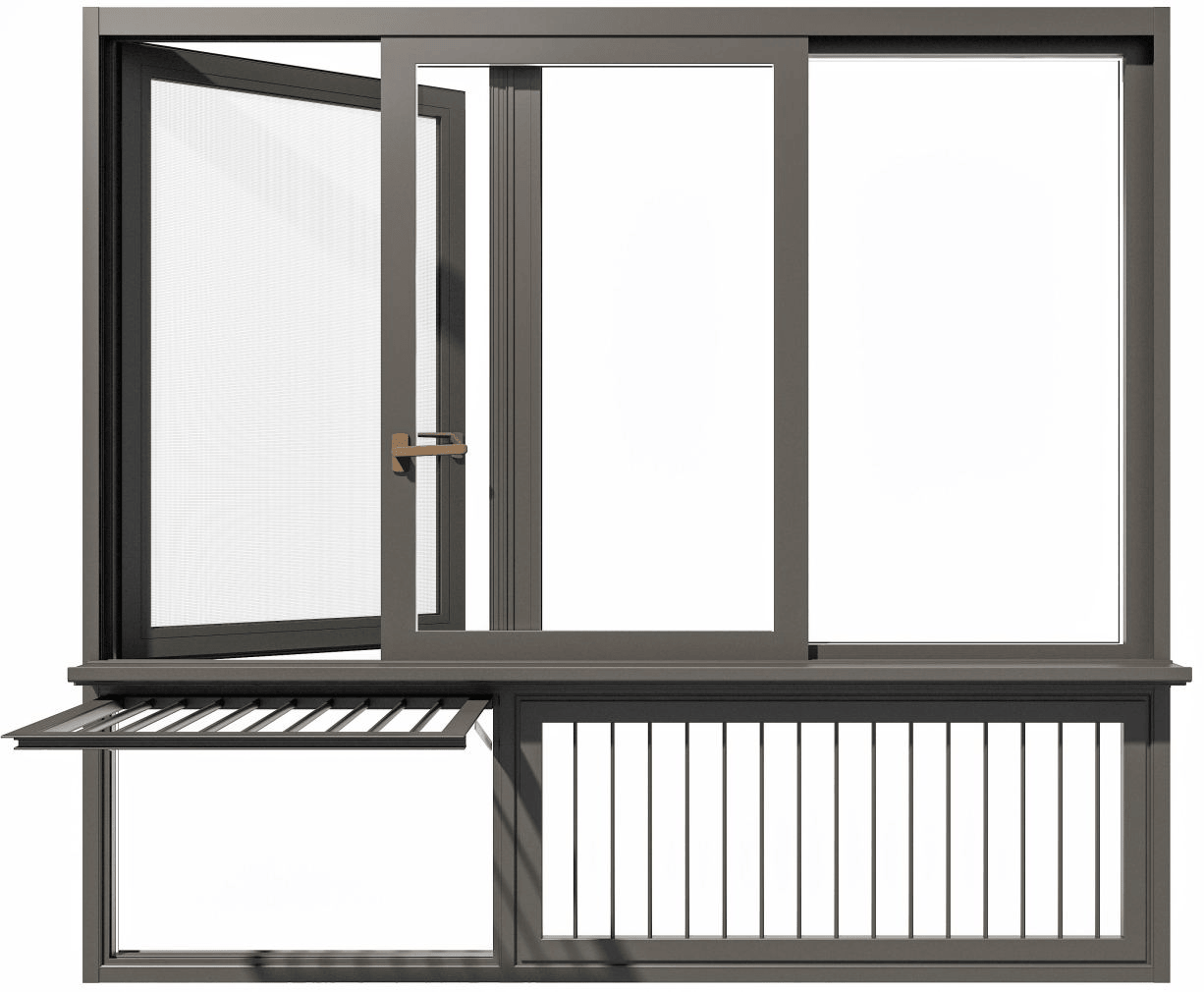
Three-Track Sliding Windows are not simply two-track systems with added complexity. The additional track changes how the entire system functions. Instead of forcing all requirements into a single interface, three-track designs allow functions to be separated spatially.
This separation is the central advantage. It allows movement to remain smooth without compromising seal compression. It allows drainage systems to expand without weakening frame stiffness. It allows structural reinforcement to exist without interfering with sliding tolerances.
At this point, it is useful to pause and make the distinction explicit, because it defines everything that follows.
The key structural difference can be summarized as follows:
In two-track systems, movement, sealing, drainage, and load resistance overlap within the same narrow interface.
In Three-Track Sliding Windows, these functions are distributed across independent zones within the frame.
This is not a feature difference. It is a system difference. And it is why performance diverges so dramatically in coastal conditions.
Wind Load: Stability Over Time, Not Just Strength on Paper
Wind resistance is often misunderstood as a single test value. In coastal homes, what matters more is how a window behaves under sustained and repeated loading. Slight frame deflection may be acceptable in laboratory conditions, but over time, it affects alignment, seal contact, and hardware wear.
Two-track systems rely on shallow engagement between the sash and frame. Under continuous wind pressure, even small deflections reduce the effectiveness of seals and increase rattle. Once movement is introduced, wear accelerates.
Three-Track Sliding Windows benefit from deeper structural engagement and more distributed load paths. The added frame depth allows reinforcement to be positioned where it actually resists bending, rather than where space happens to be available. As a result, sashes remain aligned, seals remain compressed, and movement remains controlled even after years of exposure.
This difference is particularly important in high-rise coastal buildings, where wind pressure is not only stronger but also more variable.
Water Is the Real Enemy, Not Wind
Most window failures in coastal homes are blamed on wind, but water is the true cause of damage. Wind simply delivers it to places standard designs cannot manage.
In a two-track system, drainage capacity is inherently limited. When rain is driven horizontally, water does not simply fall into weep holes; it is pushed inward under pressure. Once the drainage path fills, water seeks the path of least resistance, often bypassing seals that were never designed to act under pressure.
Three-Track Sliding Windows address this problem by design rather than by tolerance. The additional track allows for stepped drainage chambers and pressure-equalization zones. Water is intercepted, slowed, and redirected before it reaches the interior seal plane. Even when drainage channels are partially obstructed by salt residue or debris, redundancy remains.
The practical result is not just better laboratory performance, but fewer real-world failures during heavy storms.
Airtightness and Energy Efficiency in Humid Climates
Energy efficiency in coastal homes is inseparable from moisture control. Air leakage allows humid outdoor air to enter wall cavities and interior spaces, increasing cooling loads and creating conditions for condensation.
Two-track sliding windows struggle to achieve consistent airtightness over time. As seals age and tracks accumulate debris, compression decreases. Homeowners often accept this as an unavoidable compromise of sliding designs.
Three-Track Sliding Windows challenge that assumption. With space for multiple sealing layers and controlled compression zones, three-track systems maintain lower air leakage even as components age. The separation of movement and sealing means that seals are not sacrificed for smooth operation.
In hot and humid coastal climates, this translates directly into more stable indoor conditions and lower long-term energy consumption.
Acoustic Performance as a Secondary Benefit
While not always a primary concern, acoustic comfort becomes increasingly important in dense coastal developments and resort areas. Wind noise, traffic, and communal outdoor spaces can all intrude on interior quiet.
Two-track systems offer limited acoustic resistance due to their simpler interfaces. Vibrations travel easily through continuous tracks.
Three-Track Sliding Windows, by contrast, introduce natural acoustic breaks between panels. When combined with appropriate glazing, the system reduces vibration transmission and improves sound attenuation without additional complexity.
This benefit is a consequence of structural separation, not an added feature.
Where Long-Term Costs Are Decided
Salt exposure accelerates every failure mode. Hardware corrodes. Rollers seize. Tracks pit. Once movement becomes inconsistent, users apply more force, increasing wear further.
Two-track systems often expose critical hardware directly to the environment. Maintenance becomes frequent, and performance degrades steadily.
High-quality Three-Track Sliding Windows are designed with durability in mind. Marine-grade materials, protected hardware zones, and self-cleaning track geometry reduce exposure and slow degradation. The system remains usable and predictable far longer, which is why lifecycle cost comparisons often favor three-track designs despite higher initial investment.
One Comparison Table That Actually Matters
At this point, the differences can be summarized without oversimplification. The table below is not marketing-oriented; it reflects how each system behaves in real coastal conditions.
| Performance Aspect | Two-Track Sliding Systems | Three-Track Sliding Windows |
|---|---|---|
| Functional Layout | Overlapping movement, sealing, and drainage | Independent functional zones |
| Wind Load Behavior | Sensitive to frame deflection | Stable under sustained pressure |
| Water Management | Limited drainage capacity | Multi-stage drainage and pressure control |
| Airtightness Over Time | Degrades as seals wear | Maintains performance through separation |
| Coastal Durability | Hardware highly exposed | Marine-grade, protected components |
| Design Flexibility | Restricted configurations | Modular, large-opening designs |
| Long-Term Maintenance | Frequent adjustments | Reduced intervention |
This table exists for one reason: to support informed decision-making rather than persuasion.
Design Freedom Without Performance Sacrifice
Modern coastal architecture demands large openings and minimal visual obstruction. Two-track systems often force a compromise between opening size and structural integrity.
Three-Track Sliding Windows remove that constraint. Fixed and sliding panels can be combined strategically, allowing expansive openings without pushing individual sashes beyond safe limits. Slim sightlines coexist with reinforced frames because depth is used efficiently rather than minimally.
For architects, this means design intent no longer conflicts with performance requirements.
When Two-Track Systems Still Make Sense
Professional judgment requires acknowledging that no system is universally necessary. There are situations where a two-track sliding window can be acceptable.
Sheltered coastal locations with minimal wind exposure
Low-rise homes set back from the shoreline
Seasonal properties with limited year-round use
In these contexts, the environmental load may never exceed the system’s structural limits.
However, once exposure increases, compromises become risks rather than trade-offs.
When Three-Track Sliding Windows Are Not Optional
There are also conditions under which Three-Track Sliding Windows are no longer an upgrade, but a requirement.
Direct beachfront or cliffside locations
High-rise or mid-rise coastal buildings
Long-term primary residences
Projects prioritizing low maintenance and energy stability
In these cases, system separation, redundancy, and durability are not luxuries. They are safeguards against predictable failure modes.
A Coastal Decision Is a System Decision
Choosing between two-track systems and Three-Track Sliding Windows is not about trends or preferences. It is about understanding how a window system behaves when exposed to daily coastal stress over decades.
Two-track designs rely on balance and tolerance. Three-Track Sliding Windows rely on separation and structure. In mild environments, both approaches can succeed. In coastal homes, only one consistently does.
For homeowners, this means fewer surprises and lower long-term costs. For architects and developers, it means confidence that design intent will survive contact with reality.
In coastal architecture, beauty is expected. Performance is assumed. Three-Track Sliding Windows are engineered to deliver both—without asking one to sacrifice the other.