
Introduzione
When architects and developers plan large-scale projects—such as luxury residences, commercial complexes, or coastal resorts—choosing the right door system is critical to achieving the desired balance of design, durability, and performance.
Standard sliding doors often cannot meet the demands of large openings due to limited load capacity, weaker structural strength, and reduced weather resistance. For projects requiring oversized glass panels and long-term reliability, Porte scorrevoli per impieghi gravosi provide a more suitable solution.
Designed for demanding architectural applications, heavy-duty sliding doors support large glass panels while delivering smooth operation, enhanced protection, and flexible customization options. But why are they becoming a preferred choice for modern building projects? Let’s explore the key advantages.
What Defines a Heavy-Duty Sliding Door System?
Engineered for Large Panel Loads
The key advantage of a heavy-duty sliding door system is its ability to support oversized glass panels while maintaining smooth and effortless operation. While standard residential sliding doors usually handle panels weighing around 100–150 kg, heavy-duty systems are designed for much larger applications.
For example, the 185 Heavy-Duty Sliding Door System supports panels up to 285 kg. Its magnetic levitation rollers and 316L stainless steel tracks ensure stable, quiet movement even with large glass panels. With self-lubricating rollers rated for 750,000 cycles, the system is built for long-term performance in high-traffic commercial environments.
Durable Materials for Challenging Environments
Material selection plays a critical role in the reliability of heavy-duty sliding doors, especially in coastal or high-humidity locations. The use of 316L stainless steel helps improve corrosion resistance and maintain track performance under demanding conditions.
Unlike standard materials, 316L stainless steel contains molybdenum, providing enhanced protection against chloride corrosion—making it suitable for projects near coastal areas or exposed environments.
Comparison: Heavy-Duty vs. Standard Sliding Doors
| Caratteristica | Heavy-Duty Sliding Doors | Standard Sliding Doors |
|---|---|---|
| Maximum Panel Weight | 285–500+ kg | 100–150 kg |
| Track Material | Surgical-grade 316L stainless steel | Standard steel or aluminum |
| Roller System | Magnetic levitation, self-lubricating | Standard ball bearings |
| Operational Lifespan | 750,000+ cycles | 50,000–100,000 cycles |
| Wind Load Resistance | Up to 4,000 Pa (hurricane-rated) | 1,200–2,000 Pa |
| Water Drainage Capacity | 6,000+ liters per meter | 1,000–2,000 liters per meter |
| Sound Reduction | Up to 50 dB | 25–35 dB |
| Prestazioni termiche (valore U) | As low as 0.79 W/m²K | 1.6–2.5 W/m²K |
Why Do Large Projects Demand Heavy-Duty Sliding Doors?
Creating Seamless Architectural Spaces
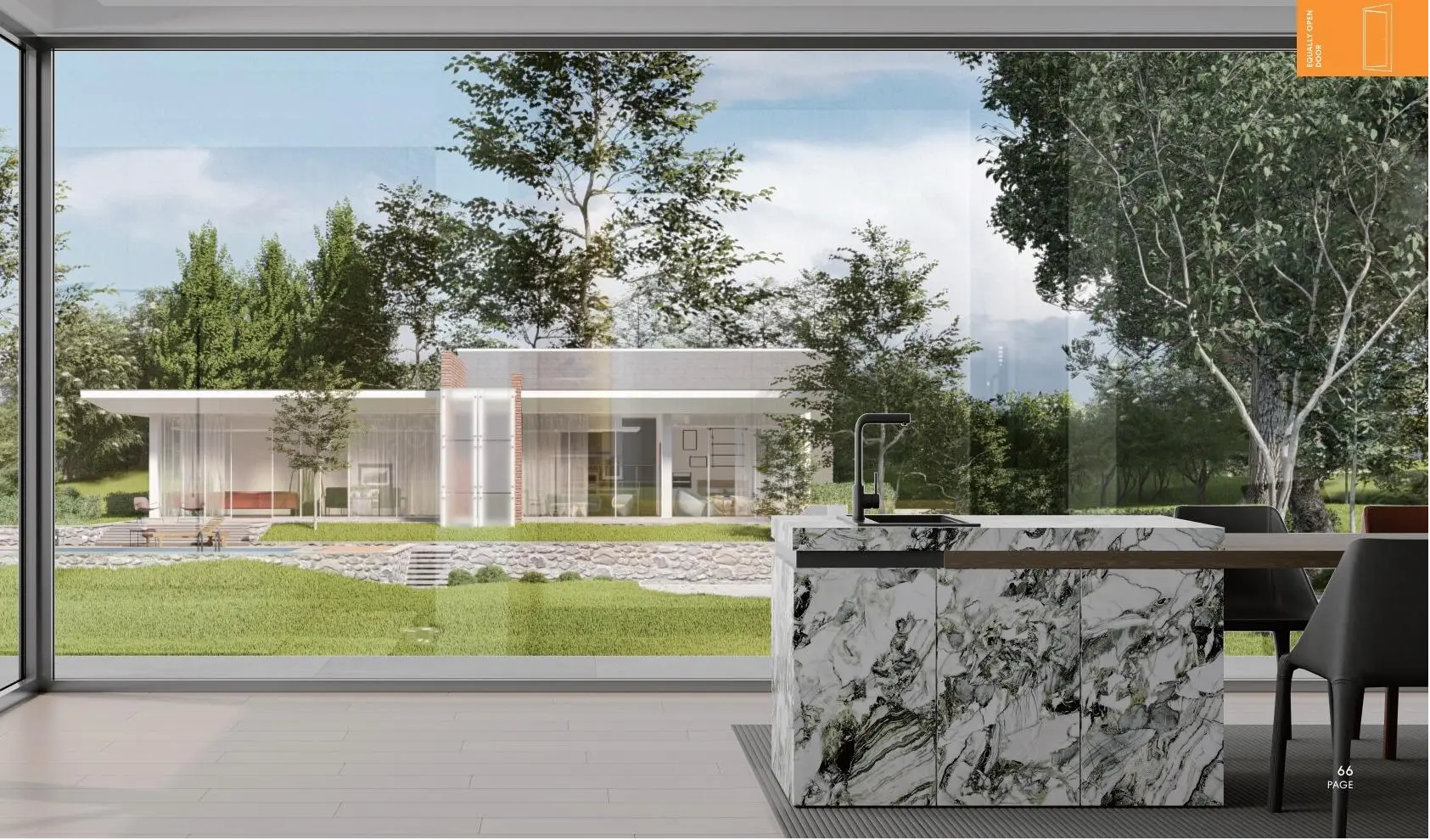
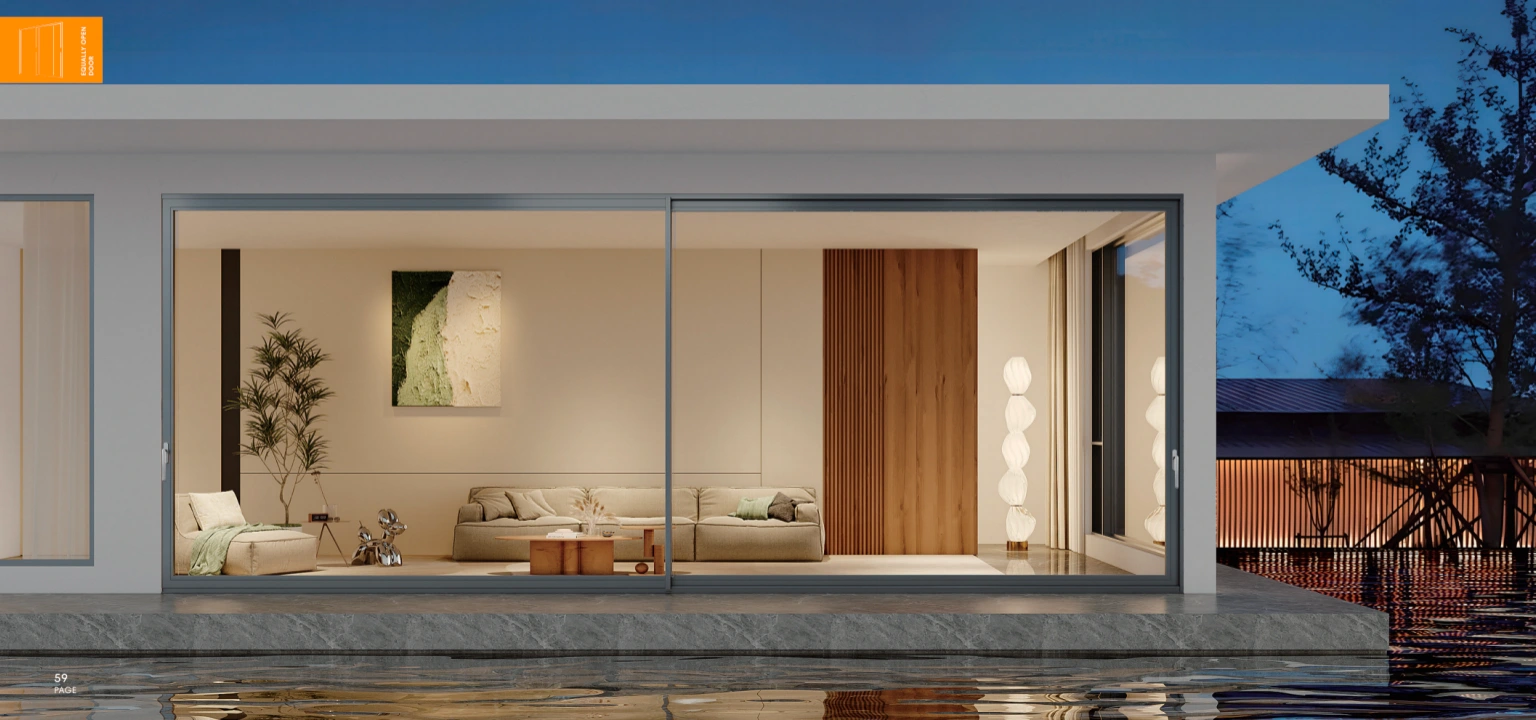
Large-scale projects, including luxury residences, commercial buildings, and hospitality venues, increasingly prioritize open designs that connect indoor and outdoor spaces. Heavy-duty sliding doors make these designs possible by supporting oversized glass panels while maintaining clear views and smooth operation.
Unlike conventional sliding doors that require multiple smaller panels, heavy-duty systems create wider openings with improved visual continuity. For commercial spaces such as showrooms, restaurants, and retail environments, this helps maximize natural light and create more attractive customer experiences.
Enhanced Safety and Weather Protection
For large projects, door performance is closely linked to building safety and long-term reliability. Heavy-duty sliding doors are designed to withstand demanding conditions through advanced structural and sealing technologies.
Key performance advantages include:
- High wind resistance: The 185 Heavy-Duty Sliding Door System can withstand wind pressures up to 4,000 Pa with Miami-Dade NOA certification, making it suitable for coastal and hurricane-prone regions.
- Effective water protection: Concealed drainage systems help manage heavy rainfall and reduce the risk of water infiltration.
- Structural stability: Reinforced frames and load-bearing components provide reliable support for large glass panels and customized architectural applications.
Improved Acoustic and Thermal Efficiency
Large glass openings often create challenges in noise control and energy efficiency. Heavy-duty sliding doors address these concerns through advanced glazing and insulation designs.
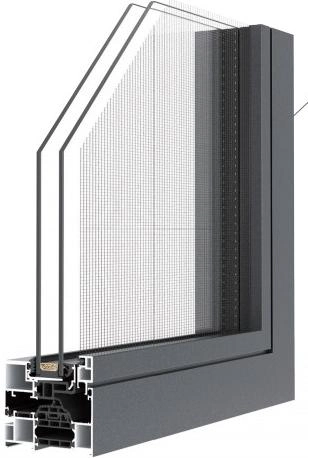
Multi-seal chambers can provide sound reduction of up to 50 dB, helping improve indoor comfort in hotels, residential towers, and commercial buildings. Thermally broken profiles with U-values as low as 0.79 W/m²K reduce heat transfer, supporting better energy efficiency and lower long-term operating costs.
Design Flexibility for Diverse Project Requirements
Customization That Supports Architectural Vision
Large-scale projects often require door systems that balance functional performance with specific architectural concepts. Heavy-duty sliding doors provide extensive customization possibilities, allowing architects, designers, and developers to create solutions that match different design styles and project requirements.
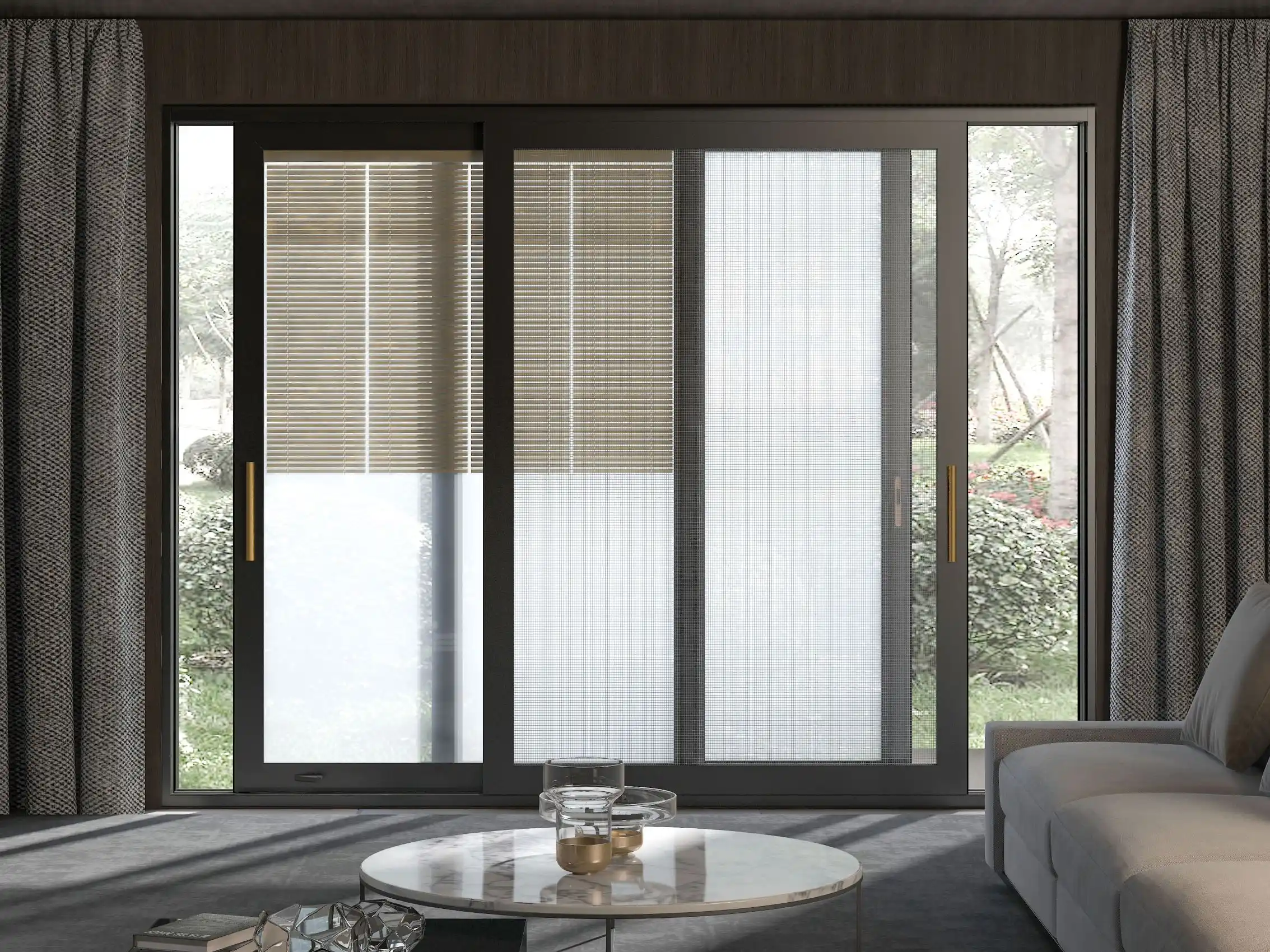
Available options include matte black, brushed brass, 24 RAL color finishes, and woodgrain laminates inspired by natural materials such as teak and walnut. Different glazing solutions, including privacy glass, self-cleaning surfaces, and decorative finishes, further expand design possibilities and allow sliding doors to become an integrated part of the overall architectural concept.
Architects and designers can also combine sliding panels, fixed units, and vent panels through flexible configurations to create wider openings and continuous glass walls. This modular approach is especially beneficial for large projects where consistent design standards and customized layouts are required across multiple areas.
Application Versatility Across Project Types
Heavy-duty sliding doors are suitable for a wide range of applications, with each project type benefiting from different performance advantages:
Luxury residential developments
High-end residences increasingly focus on seamless indoor-outdoor living experiences. Heavy-duty sliding doors allow larger openings between interior and exterior spaces while maintaining structural stability and visual appeal, helping create premium living environments.
Commercial properties and retail spaces
Showrooms, restaurants, and retail environments use large glass openings to improve visibility, attract visitors, and create more engaging spaces. Floor-to-ceiling glass systems and flexible sliding configurations help businesses maximize natural light and enhance customer experiences.
Coastal developments
Projects located near oceans or in high-humidity environments require materials with strong corrosion resistance and reliable weather performance. Heavy-duty sliding doors with durable aluminum profiles, corrosion-resistant hardware, and protective coatings help reduce maintenance requirements in challenging conditions.
Hospitality venues
Hotels and resorts require door systems that support guest comfort while maintaining energy efficiency and operational reliability. Heavy-duty sliding doors provide improved acoustic performance and thermal insulation, helping create quieter and more comfortable environments.
Performance Metrics That Matter for Large Projects
Wind Load and Weather Resistance
For large-scale projects in exposed locations, wind resistance and weather protection are essential performance factors. The 185 Heavy-Duty Sliding Door System supports wind pressure resistance of up to 4,000 Pa with Miami-Dade NOA certification, making it suitable for demanding coastal and hurricane-prone applications.
Water management is another important consideration for large glass openings. The hydrodynamic concealed drainage system is designed to handle up to 6,000 liters of water per meter, helping protect interiors from water infiltration during heavy rainfall.
Thermal Efficiency and Energy Savings
Energy efficiency has become an increasingly important consideration for developers and building owners. Thermally broken frames and multi-chamber profiles help reduce heat transfer, achieving U-values as low as 0.79 W/m²K for improved indoor comfort and energy performance.
For commercial buildings with extensive glazing areas, better thermal performance can contribute to reduced heating and cooling demands over the building lifecycle. This not only supports lower operating costs but also aligns with growing sustainability requirements in modern construction.
Operational Longevity and Maintenance
For commercial and large-scale projects, long-term reliability is a key factor in selecting door systems. The 185 system features self-lubricating rollers rated for up to 750,000 cycles, supporting consistent operation under frequent daily use.
Additional protective features, such as self-cleaning nano-coatings on frames and tracks, help reduce the accumulation of dust, ice, and salt deposits. By minimizing maintenance needs and extending service life, heavy-duty sliding doors can provide better long-term value for project owners.
The Investment Case: Why Heavy-Duty Sliding Doors Deliver Value
Beyond Initial Cost: Total Cost of Ownership
Heavy-duty sliding doors represent a higher initial investment than standard alternatives. However, the total cost of ownership tells a different story.
Standard sliding doors in commercial applications typically require replacement or major service within 5–10 years. Heavy-duty systems, engineered for 750,000+ cycles, can operate maintenance-free for decades. When spread over a 20-year building lifecycle, the cost per year of a heavy-duty system is often lower than repeatedly replacing standard doors.
Energy savings compound this value. The thermal efficiency of heavy-duty sliding doors reduces heating and cooling costs year after year. For large buildings with significant glass area, these savings can be substantial.
Risk Mitigation and Liability Reduction
For developers and building owners, risk mitigation is a critical consideration. Hurricane-rated heavy-duty sliding doors reduce the risk of storm damage, protecting both the building and its occupants. Robust security features deter break-ins and protect assets.
Insurance premiums often reflect these risk reductions. Buildings with hurricane-rated doors and comprehensive security systems may qualify for lower insurance rates, further improving the financial case for heavy-duty solutions.
Enhancing Property Value
Architectural excellence commands premium prices. Heavy-duty sliding doors that create dramatic indoor-outdoor connections, flood spaces with natural light, and deliver exceptional performance enhance property values.
For luxury residential developments, these features justify higher unit prices. For commercial properties, they attract premium tenants and command higher rents. The investment in heavy-duty sliding doors often pays for itself through increased property value.
FAQ
1. What panel weight can heavy-duty sliding doors support?
Heavy-duty systems support panels up to 285 kilograms or more, depending on the specific model. This allows for expansive glass walls that standard doors cannot accommodate.
2. Are heavy-duty sliding doors hurricane-rated?
Yes. Premium systems are certified to resist wind pressures up to 4,000 Pa with Miami-Dade NOA certification, providing proven protection in extreme weather conditions.
3. How do heavy-duty sliding doors handle water drainage?
Advanced hydrodynamic concealed drainage channels evacuate up to 6,000 liters of water per meter, ensuring interiors remain dry even during intense rainfall.
4. What customization options are available?
Options include 24 RAL colors, matte black, brushed brass, woodgrain laminates, dynamic privacy tinting, self-cleaning surfaces, and decorative etchings.
5. How long do heavy-duty sliding doors last?
Self-lubricating rollers are rated for 750,000 cycles, translating into decades of daily use with minimal maintenance requirements.
A Reliable Solution for Demanding Projects
Heavy-duty sliding doors are designed for large-scale projects that require reliable structural performance, flexible design options, and long-term durability. By supporting oversized glass panels while offering strong weather resistance, thermal efficiency, and smooth operation, they provide a practical solution for luxury residences, commercial buildings, hospitality venues, and coastal developments.
The 185 Heavy-Duty Sliding Door System supports panel weights up to 285 kg, wind resistance up to 4,000 Pa, and thermal performance with U-values as low as 0.79 W/m²K. Available in 24 RAL colors, woodgrain finishes, and customized glazing options, it can be tailored to meet different architectural requirements.
Contact our team to discuss your project needs and explore a heavy-duty sliding door solution designed for your application.