
소개
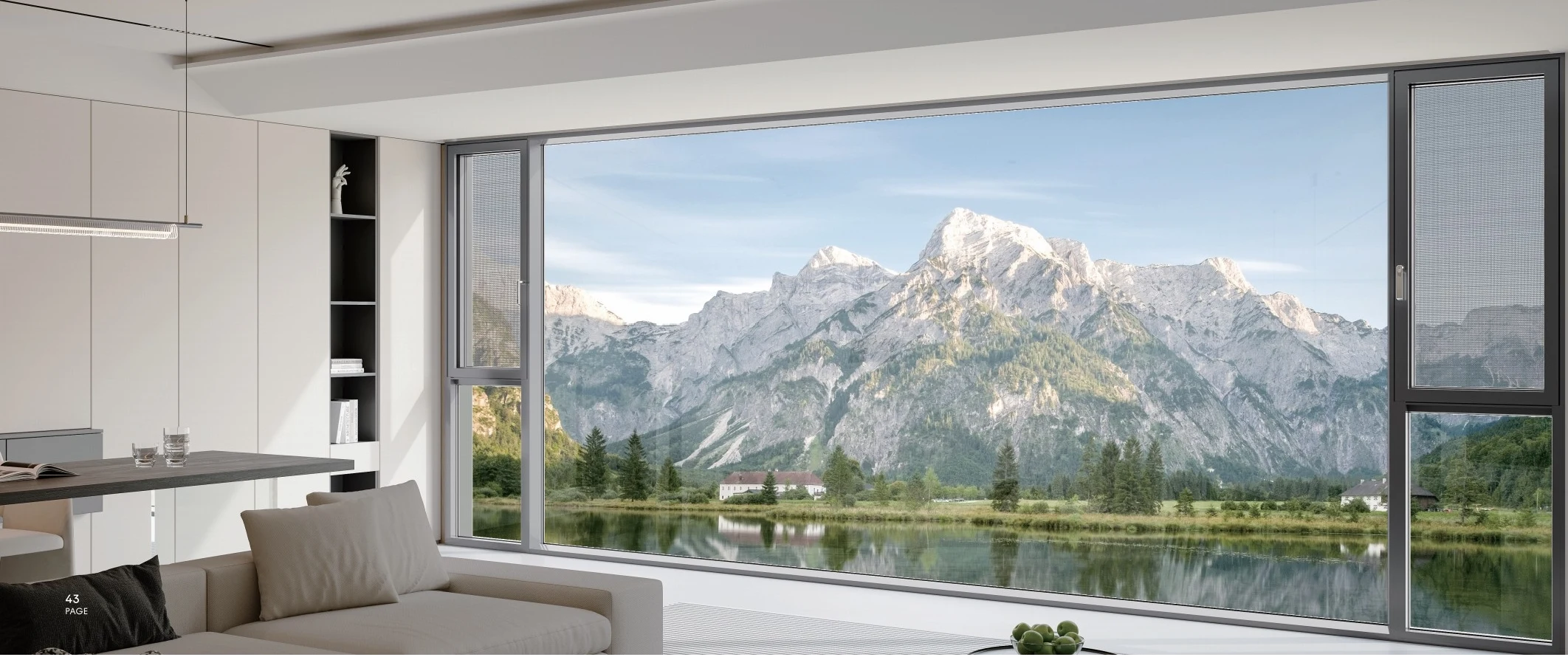
What if you could sit in the warm winter sun without bundling up, or watch a summer thunderstorm from a space that feels open to the outdoors yet remains perfectly cool, dry, and comfortable? A sunroom system makes this experience possible.
By combining high-performance glazing, intelligent climate control, and weather-resistant engineering, modern sunroom systems transform ordinary add-on spaces into true year-round living environments. They blur the boundary between indoor comfort and outdoor openness, allowing natural light, views, and seasonal changes to become part of everyday life.
In this article, we explore how sunroom systems work, examine their real-world applications, and provide a practical guide to choosing the right configuration for different climates and usage needs.
The Problem: Why Traditional Patios and Sunrooms Fall Short
A standard deck or patio is usable only when the weather cooperates. Too hot, too cold, too windy, or too rainy—the outdoor season in many climates lasts just a few months a year. Traditional sunrooms, on the other hand, often perform poorly. Single-pane glass loses heat quickly, making the space too cold in winter and unbearably hot in summer. Builders call this a “three‑season room” for a reason: it is closed off for the coldest and hottest parts of the year.
Modern sunroom systems solve both problems. It combines high‑insulation glazing, thermal breaks, and smart solar control technologies to create a space that stays comfortable across all four seasons. According to industry testing, a well‑insulated sunroom can maintain indoor temperatures 8‑12 °C cooler in summer and 5‑8 °C warmer in winter compared to traditional glass enclosures. For homeowners, this means a sunroom that is actually usable—not just a decorative addition.
In a residential case in Wisconsin, a 280‑square‑foot sunroom system with triple glazing and Low‑E coatings maintained indoor temperatures between 18‑22 °C throughout a winter where outdoor temperatures dropped to -18 °C. The homeowners reported daily use for morning coffee, reading, and even as a home office. The heating supplement required was only a small electric baseboard, which added roughly $12 per month to their winter utility bill. Comparable single‑pane enclosures in the same neighborhood often required $50–60 of additional heating per month and were too cold for regular use below freezing.
How a Modern Sunroom System Works
A sunroom system is not just a collection of glass panels. It is an engineered envelope that balances light, temperature, and structural integrity through several key technologies.
Thermal Performance and Glazing
The most important component of any sunroom system is the glazing. Single‑pane glass has a U‑value of about 1.1, meaning it loses heat quickly. For a high‑performance sunroom system, a U‑value below 0.3 is the standard. Glass with a U‑factor below 0.3 reduces heat loss by more than 70 % compared to single‑pane. The Junhan Windows sunroom system achieves a U‑value of 0.68 W/m²K using hybrid silica aerogel insulation with argon‑filled cavities.
Low‑emissivity (Low‑E) coatings add another layer of efficiency. These microscopic metal oxide layers reflect radiant heat into the room during winter while blocking solar infrared heat during summer, all without reducing visible light transmission. A typical Low‑E coating can reduce heat loss by 30‑50 % and solar heat gain by up to 60 %, depending on the specific coating chemistry.
Structural Design and Materials
Modern sunroom systems use seamless monocoque construction, where the frame is built as a single continuous shell rather than assembled from separate pieces. This eliminates exposed fasteners and potential structural weak points. Ultra‑slim 2.3 mm glazing beads maximize the glass area, allowing the frame to visually disappear.
Aluminum frames, when equipped with polyamide thermal breaks, can reduce thermal bridging by 60‑80 % compared to unbroken aluminum frames. The polyamide strip is a reinforced plastic that interrupts the flow of heat through the aluminum, keeping the interior side of the frame closer to room temperature. This combination of strength and thermal performance is why aluminum remains the dominant framing material for high‑end sunroom systems.
Smart Solar Control: How Two Technologies Compare
One of the most significant advances in sunroom technology is dynamic solar control. Two distinct technologies are now available, each with different characteristics.
Electrochromic smart glass uses a thin ceramic layer between two glass panes. When a low voltage (typically 2‑5 volts) is applied, ions migrate from an ion storage layer into the electrochromic layer, changing its optical properties from clear to tinted. The glass remains tinted without continuous power—only the switching requires energy. Darkening time is 5‑15 minutes, and clearing time is similar. This gradual change is barely perceptible and can be controlled via smartphone or automated sensors.
Suspended particle device (SPD) glass disperses microscopic particles in a liquid film between two glass panes. When voltage is applied, the particles align, allowing light to pass. When power is cut, the particles return to random orientation, blocking light. SPD glass responds nearly instantly (less than 1 second) but requires continuous power to maintain the clear state. It is typically used in smaller installations due to higher power consumption.
Both technologies can block up to 92 % of summer heat while allowing optimal daylight penetration. Electrochromic smart glass is more common in residential sunrooms because it consumes less power and maintains its tinted state during power outages. Active smart glass, which dims at the touch of a button, eliminates the need for blinds or shades, reducing dust accumulation and maintenance.
Weather Protection and Durability
A sunroom system must withstand the elements year‑round. Modern systems include:
Interlocking rafters that withstand winds up to 120 mph (Miami‑Dade NOA certified)
Hidden gutter systems that evacuate up to 10,000 liters of rainwater per hour
Condensation management with integral drainage channels
Nano‑coated glass that repels dust and pollen for reduced maintenance
Aluminum‑wood composite frames that resist warping in humid conditions
In coastal Florida, where salt‑laden air corrodes standard aluminum within a few years, manufacturers offer marine‑grade anodized finishes and stainless steel hardware. One Tampa‑based installer reported that sunroom systems with these upgrades showed no visible corrosion after five years, compared to visible etching on standard finishes within 18 months.
Where a Sunroom System Is Actually Used
The Junhan Windows product page lists several application types, each with distinct design requirements.
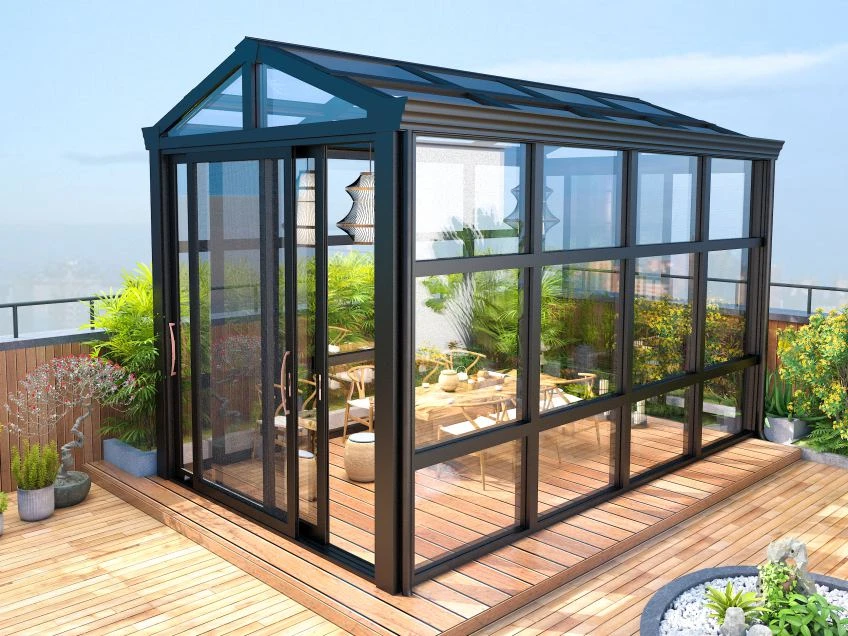
Urban oases: Slim‑profile lean‑tos for townhouse terraces gain up to 30 % additional usable space without complex building permits.
Grand conservatories: Column‑free spans up to 8 meters create open interiors for tropical plants, orchids, or expansive winter gardens.
Poolside pavilions: Humidity‑resistant profiles with self‑draining sills ensure safety and durability in moist environments. Integrated stainless steel drainage channels prevent standing water and algae growth.
Rooftop retreats: Lightweight, stable structures designed to withstand wind loads while offering unobstructed city views. Engineered wind load ratings typically exceed local codes by 20‑30 % for safety margins.
Garden lounges: Perfect for integrating green spaces with living areas, providing year‑round outdoor enjoyment without insects or sudden rain. UV‑transmissive roof panels can be specified for plant health.
Commercial hospitality projects: Restaurants adding year‑round terrace seating, hotels building spa relaxation areas, and retirement communities creating light‑filled common spaces for residents.
Real estate developers report that adding a luxury sunroom amenity can increase property value by up to 22 % and reduce installation time by up to 40 % compared to traditional builds. In a mixed‑use development in Oregon, the developer added a shared sunroom to a 40‑unit apartment building. Rental rates for units adjacent to the sunroom commanded $175 more per month than comparable units elsewhere in the building—an immediate return on the installation cost.
A detailed tropical installation example: In a beachfront project in Thailand, a custom sunroom system was installed on a north‑facing terrace with prevailing coastal breezes. The system used high‑strength aluminum frames with a double powder coat (zinc‑epoxy‑polyester) rated for 2,000 hours of salt spray resistance. Triple‑glazed Low‑E glass with spectrally selective coating blocked 82 % of solar heat gain while maintaining 71 % visible light transmission. The result: space usable from 8 am to 6 pm year‑round without air conditioning, relying only on ceiling fans and cross‑ventilation.
Sunroom System vs. Traditional Room Addition
A frequent question from homeowners is whether to invest in a sunroom system or a conventional room addition. Each serves different needs.
| Aspect | 선룸 시스템 | Traditional Room Addition |
|---|---|---|
| 비용 | 15,00040,000 (prefabricated) to $47,000 (custom) | 21,00073,000 |
| Construction time | Days to a few weeks | Weeks to months |
| HVAC integration | Often separate or supplemental | Fully integrated |
| Permitting | Simpler (engineered, prefab‑approved systems) | More complex |
| Investment return (ROI) | 45–70 % depending on type | 50‑65 % |
| Best for | Living, dining, garden, relaxation | Bedrooms, kitchens, full‑time offices |
| Natural light | Exceptional — up to 90 % glass coverage | Limited by the window-to-wall ratio |
| 노이즈 감소 | Poor (glass transmits sound) | Good (insulated walls block sound) |
The ROI data shows that a four‑season sunroom can return 60‑70 % of its cost at resale, while a three‑season windowed enclosure returns 50‑65 %. This makes a sunroom system one of the higher‑value home additions available. Note that the noise reduction trade‑off is significant: if the addition site is near a busy street or airport, a traditional walled addition may be more appropriate despite the higher cost.
When to choose a sunroom system: When your primary goal is to add a light‑filled living space quickly, cost‑effectively, and with a strong visual connection to the outdoors.
When to choose a traditional addition: When you need a fully integrated bedroom, kitchen, or home office that must match the thermal performance of the existing house, or when noise isolation is critical.
Emerging Trends in Sunroom Systems
Smart Glass and Automated Comfort
Electrochromic smart glass is transforming the sunroom experience. By applying a low-voltage charge, the glass instantly adjusts from clear to tinted, providing on‑demand solar shading from within the glass unit itself. This reduces glare, prevents overheating, and maintains a clean aesthetic without external blinds or shades. Homeowners can now control sunlight via a smartphone app—dimming the glass, activating automated shades, or adjusting ventilation based on CO2 levels and sun angle. Some high‑end systems integrate with weather forecast data: the glass automatically darkens when a heatwave is predicted for the next day, pre‑cooling the sunroom before the homeowner wakes up.
Biophilic Integration and Sustainable Materials
Modern sunrooms increasingly function as living spaces for plants and people together. UV‑transmissive roof panels nurture indoor gardens while protecting occupants from harmful rays. Built‑in planters, automated irrigation systems, and specialized lighting for plant growth are becoming standard in high‑end installations. In Scandinavian markets, sunroom systems are now being designed specifically for year‑round plant cultivation—combining triple glazing for cold insulation with spectrally selective coatings that maximize photosynthetically active radiation.
Sustainable materials are also gaining ground. Bio‑based thermal breaks made from recycled polymers, recycled aluminum frames (content up to 85 % post‑consumer), and low‑VOC finishes help sunroom systems meet green building certifications like LEED and Passivhaus. A recent project in California achieved LEED Gold certification partly due to the sunroom‘s use of certified sustainable components and its contribution to passive solar heating.
Climate‑Specific Configurations
Unlike older one‑size‑fits‑all sunrooms, modern systems can be tuned to local climates:
Arctic‑ready profiles: Triple glazing with argon/krypton fill, warm‑edge spacers, and enhanced thermal breaks (minimum 45 mm) for extreme cold. These systems achieve U‑values as low as 0.18 W/m²K.
Subtropical configurations: Solar control Low‑E coatings that minimize heat gain while preserving natural light, plus automated skylight venting for humidity management. Some systems include roll‑up insect screens integrated into the frame profile.
Hurricane‑zone engineering: Impact‑resistant laminated glass (tested to large‑missile impact standards) and reinforced interlocking rafters certified to Miami‑Dade NOA standards.
How to Choose the Right Sunroom System
Selecting a sunroom system requires balancing multiple factors. Use this checklist to guide your decision:
Step 1 — Define how you will use the space
Year‑round living (dining, lounge, home office): Requires four‑season performance—triple glazing, thermal breaks, and dedicated heating/cooling. Expect U‑value below 0.3.
Three‑season use (spring through fall): Double glazing with Low‑E may be sufficient, with seasonal closing panels for winter. U‑value around 0.5‑0.7.
Plant cultivation/conservatory: Needs UV‑transmissive glazing, humidity management, and floor drains.
Step 2 — Assess your site conditions
Sun exposure direction (south‑facing maximizes passive solar heat but risks overheating without proper glazing)
Local climate extremes (minimum and maximum temperatures, wind loads, snow load, humidity range)
Coastal corrosion risk (marine‑grade finishes recommended within 1,500 ft of salt water)
Step 3 — Evaluate glazing and frame options
For four‑season use: triple‑pane Low‑E with argon fill. Seek a U‑value below 0.3.
Frame material: Aluminum with thermal breaks for slim profiles and strength. Steel for very large spans (over 10 meters). Wood‑clad aluminum for aesthetics.
Glass type: Choose between electrochromic smart glass (lower power, gradual tint) or SPD glass (instant response, higher power consumption).
Step 4 — Check certifications
NFRC (National Fenestration Rating Council): Energy performance labels for glazing (U‑value, SHGC, VT).
AAMA/NSA 2100: Industry standard for structural performance and weather resistance (water penetration, air infiltration, structural load).
Miami‑Dade NOA: Required for hurricane‑prone regions (wind‑borne debris impact and pressure cycling).
LEED / Passive House compatibility: For green building projects.
Step 5 — Plan for integration with your home
Will the sunroom share HVAC with adjacent rooms, or need a separate mini‑split (typical for four‑season rooms)?
Does the existing foundation support additional load? A simple concrete slab is usually sufficient for single‑story sunrooms.
Does the attachment point need waterproof flashing to prevent leaks? Roof‑to‑wall connections require properly stepped flashing.
Step 6 — Budget for long‑term maintenance
Low‑E coatings and inert gas fills degrade gradually. Expect 20‑30 years before noticeable performance loss.
Smart glass electronics have a typical lifespan of 15‑20 years. Replacement is expensive, but it has come down in cost.
Aluminum frames require little maintenance. Wash frames yearly with mild soap and water to prevent corrosion in coastal areas.
자주 묻는 질문
Q1: Can a sunroom system be used comfortably in winter in cold climates?
Yes. Systems with triple‑pane glazing, U‑values below 0.3, and thermal breaks can stay comfortable with minimal supplemental heat. Some achieve warmth comparable to well‑insulated standard rooms.
Q2: How long does a sunroom system installation typically take?
Prefabricated engineered sunroom systems can be installed in days to a few weeks, compared to months for a traditional room addition. Complex custom designs may take longer.
Q3: Does a sunroom system add value to a home?
Yes. Industry data shows an ROI of 45‑70 % depending on system type and local market. Four‑season sunrooms deliver the highest returns, typically 60‑70 %.
Q4: What is smart glass, and is it worth the upgrade?
Electrochromic smart glass dynamically adjusts tint to block heat and glare when needed and return to clear when conditions change. It eliminates blinds, improves energy efficiency, and is considered one of the most significant recent advances in residential glass.
Q5: Are permits required for a sunroom installation?
Yes, most jurisdictions require building permits for any habitable addition. However, prefabricated sunroom systems that are pre‑engineered and code‑certified often have a simpler approval process than custom builds.
Q6: How do I clean and maintain a sunroom system?
Clean glass with non‑abrasive, non‑acidic cleaners and a soft cloth twice per year. Wash aluminum frames with mild soap and water. Check seals around doors and windows annually.
결론
A sunroom system fundamentally changes the relationship between a home and its surroundings. It creates a space that is neither fully inside nor fully outside—a transition zone where you can watch falling snow while wearing a light sweater, read a book under natural light on a cloudy afternoon, or host a dinner party that flows from the dining room into a glass‑enclosed garden.
The technology powering these spaces has advanced far beyond the drafty, single‑pane solariums of previous decades. Modern systems use thermally broken aluminum frames, triple‑pane glazing with U‑values below 0.3, smart glass that adapts to changing light, and climate‑specific engineering that works with the environment rather than against it. For homeowners, architects, and developers, the question is no longer whether to add a glass enclosure, but which system best integrates with the property’s architecture, climate, and intended use.
At Junhan Windows, the Sunroom System is engineered with hybrid silica aerogel insulation (U=0.68 W/m²K), ultra‑slim 2.3 mm glazing beads, and seamless monocoque construction. Climate‑configurable options include arctic‑ready triple glazing for cold regions and subtropical Low‑E coatings for hot climates, with column‑free spans up to 8 meters. Each system is engineered to meet local building codes and is certified for energy performance and weather resistance.
If you are planning a residential sunroom, rooftop retreat, or commercial conservatory, the next step is to match the right system configuration to your site conditions and budget. Contact the Junhan Windows team with your location, intended use, and approximate dimensions. We will provide a recommended glazing package, structural specification, and no‑obligation project consultation.