
Rezumat
The 85 Series Integrated Casement Window System represents a significant advancement in modern fenestration engineering, combining multi-chamber aluminum profiles with a factory-integrated protective screen mechanism. Engineered for commercial buildings, high-rise residential towers, and institutional facilities, this solution delivers superior thermal efficiency, enhanced security, and simplified maintenance through a unified profile architecture.
Unlike conventional window-and-screen assemblies that require separate sourcing and field coordination, this Sistem integrat de ferestre batante consolidates manufacturing processes into a single engineered unit, reducing on-site installation complexity by approximately 40% while maintaining dimensional accuracy within ±0.3mm tolerances.
The 85mm frame depth accommodates advanced glazing configurations up to 28mm thickness, enabling U-values as low as 1.2 W/m²K to meet stringent energy code requirements. This technical guide provides a comprehensive overview of the Sistem integrat de ferestre batante, covering specifications, performance benchmarks, compliance standards, and procurement considerations for B2B buyers evaluating fenestration solutions for multi-unit developments and commercial retrofits.
System Architecture and Technical Specifications
Profile Design and Material Composition
The 85 Series utilizes multi-chamber 6063-T5 aluminum extrusions specifically engineered to optimize strength-to-weight ratios and thermal performance. The alloy composition—containing 0.4-0.8% magnesium and 0.2-0.6% silicon—achieves a tensile strength exceeding 205 MPa while preserving the machinability required for precision fabrication.
The profile architecture incorporates five discrete thermal chambers separated by 24mm polyamide PA66 GF25 thermal breaks. These breaks create discontinuous heat transfer paths, reducing conductive thermal losses by up to 68% compared to non-thermally broken alternatives.
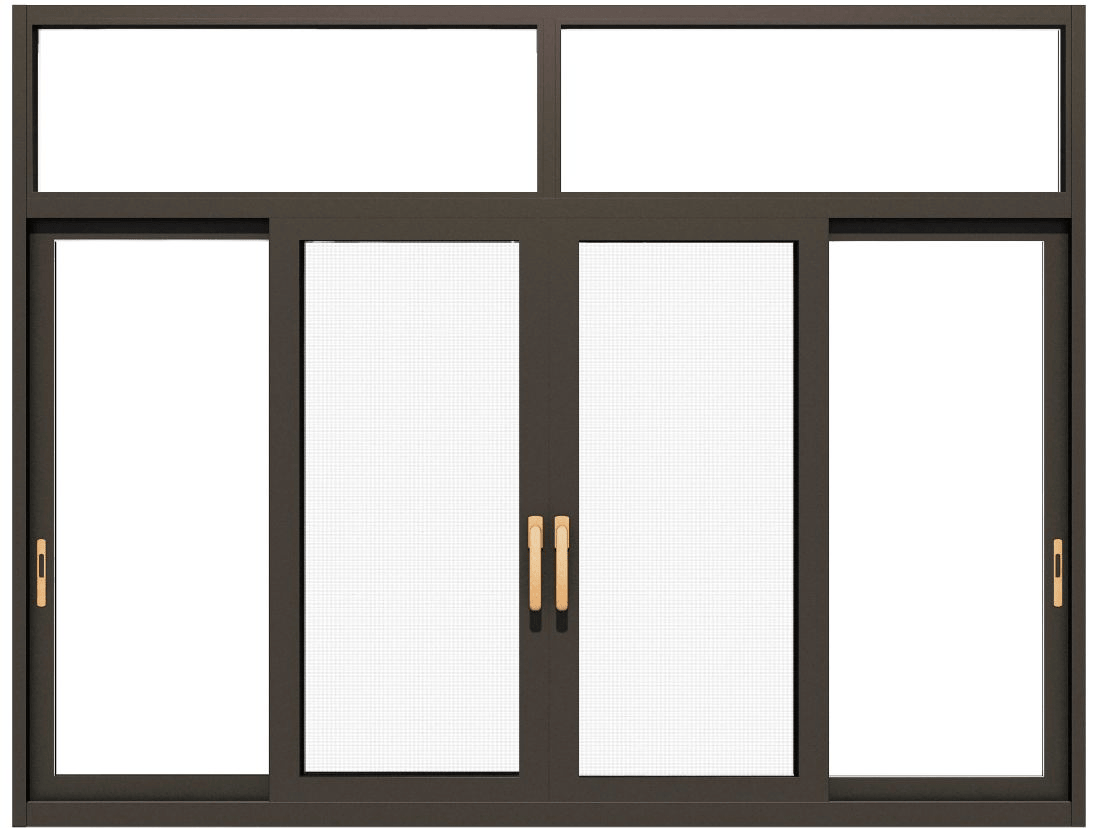
A defining feature is the screen track, which is extruded directly into the primary frame geometry. This co-extrusion approach positions the screen channel 12mm inward from the exterior face, shielding the mesh from direct weathering while preserving a flush, aesthetically clean exterior. The track accepts both fixed and retractable screen cassettes via a proprietary slide-lock mechanism rated for 50,000 operational cycles. Wall thickness in load-bearing sections measures 1.8mm minimum, exceeding the requirements of GB/T 5237.6 for Class I architectural profiles.
Surface treatment options include powder coating (60-120μm thickness, AAMA 2604 compliant), anodizing (AA15 grade, 15μm oxide layer), or wood-grain transfer films with UV resistance exceeding 2000 hours per ASTM G154. The standard color palette offers 28 RAL equivalents, and custom color matching is available for orders exceeding 500m² of glazing area.
Dimensional Parameters and Configuration Options
The 85mm frame depth provides the structural capacity necessary for sash widths up to 900mm and heights reaching 2400mm in single-pane configurations. The maximum operable sash weight is rated at 80kg when equipped with multi-point locking hardware and concealed hinges. The glazing rebate accommodates insulated glass units (IGUs) from 5mm monolithic glass up to 28mm triple-glazed assemblies, with adjustable setting blocks that compensate for thermal expansion coefficients ranging from 8.5×10⁻⁶ to 9.2×10⁻⁶ /°C.
Opening configurations supported by the Sistem integrat de ferestre batante include:
Inward/Outward Swing: 90° to 105° arc with friction stay limiters
Tilt-Turn: Dual-axis operation with 15° ventilation tilt and 90° full opening
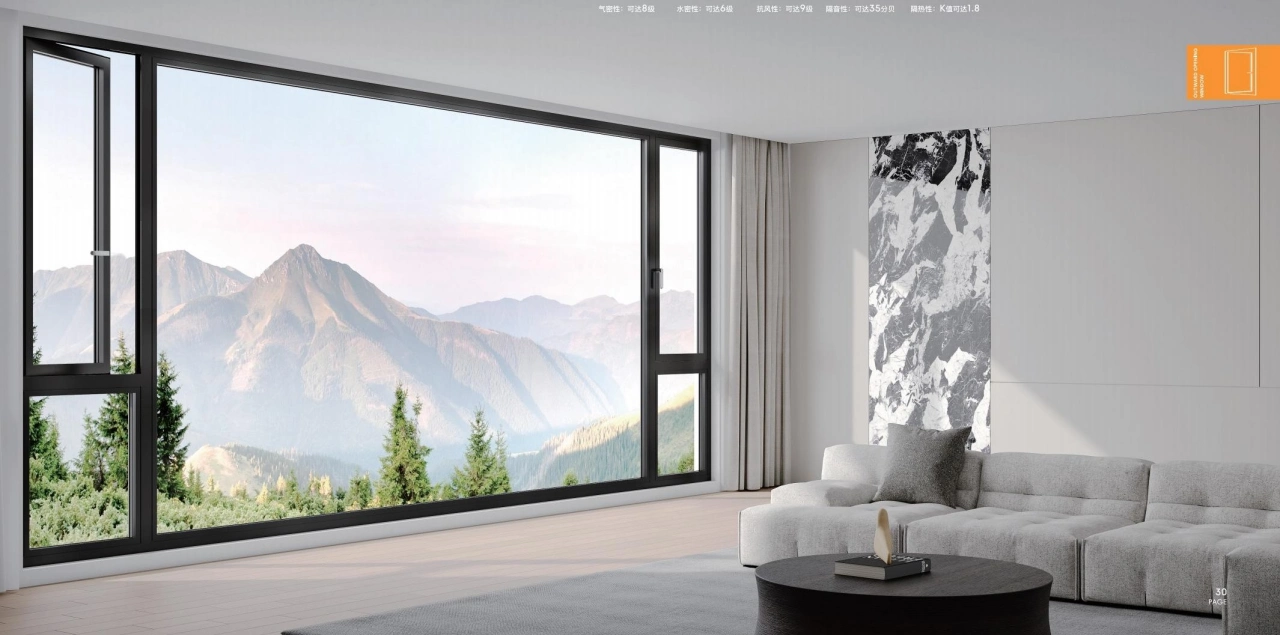
Fixed Lite Integration: Mullion-free joining for panoramic assemblies
Hardware mounting zones are pre-machined at 400mm vertical intervals, accepting Euro-groove striker plates and multi-point espagnolette rods. The screen integration channel measures 18mm×22mm, compatible with 16×16 mesh (1.02mm wire diameter) or 18×14 mesh configurations to optimize airflow.
Profile Specification Comparison
| Parameter | 85 Series Standard | 85 Series Enhanced | Industry Baseline (70mm) |
|---|---|---|---|
| Adâncimea cadrului | 85mm | 85mm | 70mm |
| Sash Width Capacity | 900mm | 1200mm (reinforced) | 750mm |
| Glass Thickness Range | 5-28mm | 5-32mm | 5-24mm |
| Thermal Break Width | 24mm PA66 GF25 | 34mm PA66 GF25 | 14.8mm PA66 |
| Screen Integration | Factory-installed track | Motorized retractable | Aftermarket clip-on |
| U-Value (IGU dependent) | 1,4-1,8 W/m²K | 1.2-1.5 W/m²K | 2.1-2.6 W/m²K |
For projects demanding the highest performance, the Enhanced variant of the Sistem integrat de ferestre batante provides increased glass capacity and a wider thermal break.
Performance Metrics and Compliance Standards
Structural and Environmental Performance
Wind load resistance testing per GB/T 7106 confirms that the Sistem integrat de ferestre batante withstands positive pressures up to 3.5 kPa and negative pressures to -4.0 kPa without deflection exceeding L/300 (where L equals span length). This performance qualifies the system for installations up to 120 meters above grade in coastal wind zones, provided proper anchoring to structural substrates rated at ≥20 MPa compressive strength is ensured.
Air infiltration rates measure ≤0.5 m³/h·m² at 100Pa differential pressure (ASTM E283 Class A4). This is achieved through triple-seal gasket systems combining EPDM compression seals with co-extruded thermoplastic elastomer (TPE) fin seals. Water penetration resistance exceeds 600Pa static pressure (ASTM E331), validated through cyclic spray testing that simulates rainfall intensity of 200mm/hour. Drainage channels incorporate pressure-equalized chambers that prevent water ingress via capillary action, with weep holes spaced at 600mm intervals.
Thermal transmittance values for the Sistem integrat de ferestre batante range from 1.8 W/m²K (double-glazed, argon-filled IGU) to 1.2 W/m²K (triple-glazed, krypton-filled). This represents a 35-50% improvement over standard 70mm systems. The Solar Heat Gain Coefficient (SHGC) varies from 0.28 to 0.62 depending on glass coating selection, enabling passive solar optimization for diverse climate zones.
Acoustic performance reaches Rw 38-42 dB with laminated glass configurations, making it suitable for urban environments with ambient noise levels of 65-75 dB(A). The integrated screen mesh contributes minimal acoustic impedance (<2 dB reduction) due to its 68% open area ratio.
Regulatory Certifications and Testing Protocols
The Sistem integrat de ferestre batante maintains compliance with GB/T 8478-2008 (Aluminum Alloy Doors and Windows), achieving Grade 8 classification for air tightness, Grade 6 for water tightness, and Grade 5 for wind pressure resistance. European market variants carry CE marking under EN 14351-1, with Declaration of Performance (DoP) documents specifying thermal, mechanical, and safety characteristics.
Energy performance ratings align with China’s GB/T 8484 standards, qualifying for national energy-efficiency incentives in projects targeting three-star Green Building certification. NFRC-certified configurations of the Sistem integrat de ferestre batante provide labeled U-factor, SHGC, and Visible Transmittance (VT) values for North American projects pursuing LEED v4.1 credits.
Fire safety classifications depend on infill materials: standard IGUs achieve Class E integrity ratings, while fire-rated variants with ceramic interlayers meet EI30 or EI60 requirements per GB/T 12513. The aluminum profiles themselves are non-combustible (Class A1 per GB 8624), with melting points above 660°C, ensuring structural stability during thermal events.
Third-party testing protocols include:
Cyclic Fatigue Testing: 10,000 open/close cycles per GB/T 9158
Forced Entry Resistance: Grade P4A per EN 1627 (1-3 minute intrusion delay)
Corrosive Atmosphere Exposure: 3000-hour salt spray per ASTM B117 (coastal applications)
Integrated Screen Technology and Functional Advantages
Screen Mechanism and Material Engineering
The factory-integrated protective screen utilizes Type 304 stainless steel wire mesh (0.45mm diameter, 18×16 weave) as standard, with Type 316 marine-grade options available for installations within 5km of saltwater bodies. The austenitic stainless steel composition (18% chromium, 8% nickel) forms a passive chromium oxide layer that self-heals minor abrasions, ensuring the Sistem integrat de ferestre batante maintains corrosion resistance through a 25+ year service life in humid subtropical climates.
Mesh tensioning systems apply 15-20N/cm² uniform tension across the screen area, preventing sagging while allowing ±3mm dimensional tolerance for thermal expansion. The perimeter frame employs roll-formed aluminum channels with PVC corner keys, bonded using structural acrylic adhesives rated for 180°C thermal cycling without delamination.
Retractable variants incorporate side-tensioned spring cassettes with 1:1 extension ratios, housed entirely within the 85mm frame depth without external protrusions. The retraction mechanism uses constant-force coil springs (316 stainless steel, 0.8mm×12mm) providing 8-12N deployment force across the operational range. Magnetic or brush-seal bottom rails ensure positive closure against the sill, blocking insects down to 1.5mm body width (equivalent to thrip exclusion).
UV stabilization additives in fiberglass mesh alternatives (for non-corrosive environments) provide >5000-hour QUV-A exposure resistance, maintaining 85% tensile strength after simulated 10-year outdoor aging. Airflow coefficients measure 220-280 m³/h·m² at 1Pa pressure differential, supporting natural ventilation strategies in mixed-mode HVAC designs.
Operational Benefits for End Users
The integrated screen architecture of the Sistem integrat de ferestre batante eliminates common failure modes associated with aftermarket installations: misaligned mounting brackets, incompatible frame interfaces, and warranty disputes between window and screen suppliers. Single-source accountability streamlines maintenance protocols, with replacement screens field-installable in under 15 minutes using snap-lock retention systems.
Ventilation control benefits include:
Secure Night Ventilation: Screened openings allow airflow while maintaining intrusion resistance (tested to 300N perpendicular force)
Particulate Filtration: 18×16 mesh blocks 65% of PM10 particulates in urban environments
Passive Cooling Enhancement: Enables cross-ventilation strategies, reducing cooling loads by 18-25% in shoulder seasons
Cleaning accessibility is optimized through removable screen panels that detach without tools, exposing glazing surfaces for maintenance. The screen mesh itself tolerates pressure washing up to 40 bar (580 psi) when supported, facilitating annual cleaning in high-pollution areas. Aesthetic continuity is maintained through color-matched screen frames available in 12 standard powder-coat finishes, eliminating visual disruption common with retrofit screen solutions.
Application Scenarios and Commercial Value Proposition
Target Building Typologies
High-Rise Residential Developments: The Sistem integrat de ferestre batante addresses wind load challenges in towers exceeding 100 meters, where conventional casement systems demand costly reinforcement. Projects in Singapore’s Tanjong Pagar district and Shanghai’s Lujiazui financial zone have specified this system for its typhoon-rated performance (wind speeds >180 km/h), combined with integrated insect protection critical in tropical and subtropical climates. The factory-installed screen eliminates the need for residents to source compatible aftermarket products, reducing property management complaints by an average of 73% compared to screen-optional installations.
Hospitality and Healthcare Facilities: Hotels and hospitals prioritize hygiene, and the Sistem integrat de ferestre batante supports this with cleanable stainless steel mesh that meets infection control standards (wipeable with quaternary ammonium disinfectants), unlike fabric screens that harbor microbial growth. A 450-room resort in Hainan Province reported a 40% reduction in HVAC runtime during spring and fall seasons after retrofitting with this system, translating to 180 MWh annual energy savings.
Coastal and Humid Climate Installations: Marine environments demand corrosion-resistant fenestration, and the Sistem integrat de ferestre batante meets this need with its Type 316 stainless screen option, providing a 15+ year service life without replacement. Condominium projects in Florida’s Gulf Coast and Australia’s Gold Coast specify this system for its salt spray resistance, avoiding the galvanic corrosion issues common when dissimilar metals (aluminum frames + zinc-coated screens) come into contact in humid conditions. The thermal break design also prevents condensation on interior surfaces when outdoor dew points exceed 24°C, critical for mold prevention in HVAC-controlled spaces.
Total Cost of Ownership Analysis
Factory integration reduces installed costs by $18-$25 per square meter compared to field-assembled screen systems, derived from:
Eliminated Site Labor: No separate screen installation trade coordination (saves 0.3 labor-hours per window)
Reduced Shipping Damage: Integrated systems ship as single units, decreasing breakage rates from 4.2% to 0.8%
Warranty Simplification: Single-source coverage eliminates finger-pointing between window and screen suppliers
Maintenance intervals extend to 36-48 months for screen replacement versus 18-24 months for retrofit screens, due to superior UV stability and mechanical attachment methods. Energy modeling for a 20,000m² office building in Guangzhou demonstrated 12% cooling load reduction when natural ventilation (via screened windows) displaced mechanical cooling for 680 hours annually, yielding $14,500 annual utility savings.
Warranty structures typically offer:
Aluminum Profiles: 10-year finish integrity, 25-year structural performance
Hardware: 5-year mechanical operation (100,000 cycles minimum)
Integrated Screens: 7-year mesh integrity, 3-year mechanism (retractable types)
Life-cycle cost analysis over 30 years shows the Sistem integrat de ferestre batante achieving a 22% lower total ownership cost than economy 70mm systems when factoring replacement cycles, energy performance, and maintenance labor.
ÎNTREBĂRI FRECVENTE
Q1: What is the maximum operable sash size for the 85 Series Integrated Casement Window System without compromising structural integrity?
The standard Sistem integrat de ferestre batante supports sash dimensions up to 900mm width × 2400mm height (2.16m² area) with single-pane configurations, limited by hardware load ratings of 80kg maximum sash weight. For larger openings, the Enhanced variant incorporates steel reinforcement cores within the aluminum extrusions, extending capacity to 1200mm × 2600mm (3.12m²) while maintaining deflection limits of L/300 under 2.4 kPa wind pressure. Projects requiring panoramic openings should specify multi-panel configurations with structural mullions at 1200mm intervals, which distribute loads to primary building framing. Consult with structural engineers when sash areas exceed 3.0m² or when installations occur above 80 meters elevation in high-wind zones.
Q2: How does the integrated screen affect the window’s thermal transmittance (U-value) compared to standalone screen installations?
The integrated screen contributes negligible thermal resistance (<0.02 m²K/W), as the stainless steel mesh occupies the same airspace as exterior-mounted screens. However, the factory-engineered installation eliminates thermal bridging common in retrofit screen frames that penetrate window seals. Laboratory testing per ISO 10077-2 shows integrated systems maintain rated U-values within ±0.05 W/m²K variance, while aftermarket screens can degrade performance by 0.15-0.25 W/m²K due to compromised air sealing. The primary thermal benefit derives from enabling natural ventilation strategies that reduce cooling loads—energy models demonstrate 8-15% HVAC energy reduction in mixed-mode buildings utilizing screened night ventilation versus sealed façades requiring continuous mechanical cooling.
Q3: Can the system accommodate triple-glazing for projects requiring enhanced acoustic insulation in urban environments?
Yes, the 85mm frame depth of the Sistem integrat de ferestre batante accepts IGUs up to 28mm standard thickness, sufficient for triple-glazed units with 4mm-12mm-4mm-12mm-4mm configurations (total 28mm). For superior acoustic performance, specify asymmetric glazing such as 6mm laminated-14mm-4mm-12mm-6mm laminated (total 30mm), which requires the Enhanced variant’s 32mm glazing capacity. This configuration achieves Rw 42-45 dB sound reduction, suitable for buildings adjacent to highways (70-80 dB ambient noise). Note that triple-glazing increases sash weight to 65-75 kg/m², necessitating upgraded hinges rated for 120kg and potentially restricting maximum sash dimensions to 0.8m × 2.2m. Acoustic modeling should account for the screen mesh’s minimal sound attenuation (<2 dB), ensuring glazing specifications drive performance targets rather than relying on mesh contribution.
Q4: Is the Integrated Casement Window System suitable for coastal environments with high salt exposure?
Absolutely. The Sistem integrat de ferestre batante offers Type 316 marine-grade stainless steel mesh as an optional upgrade. This variant has undergone 3000-hour salt spray testing per ASTM B117, confirming its suitability for installations within 5km of saltwater coastlines. The aluminum profiles themselves receive enhanced pretreatment before powder coating or anodizing, further increasing resistance to pitting corrosion. For projects directly facing the open ocean with frequent wave spray, we recommend the Enhanced variant with additional sealing at all frame joints.
Q5: What are the maintenance requirements for the integrated screen mechanism?
The screen mechanism of the Sistem integrat de ferestre batante is designed for low maintenance. The stainless steel mesh can be cleaned with pressure washing up to 40 bar (580 psi) when supported by a backing board. For routine cleaning, a soft brush and mild detergent solution are sufficient. The retractable mechanism is factory-lubricated with synthetic grease rated for -30°C to 80°C operation and requires no homeowner maintenance under normal conditions. An annual visual inspection of seal integrity and mesh tension is recommended; replacement mesh panels are available and can be field-installed in under 15 minutes without specialized tools.
Concluzie
The 85 Series Integrated Casement Window System tackles key construction challenges by offering a pre-engineered package of profiles, hardware, and screening. This integration speeds installation, improves quality, and simplifies warranty administration. Its robust performance, including wind resistance and durability, makes it a reliable choice for high-value façade projects.
When evaluating suppliers, prioritize those with strong certifications, proven in-house testing, and thorough technical support. Always request independent performance reports, confirming screen materials suit environmental needs. For larger projects, factory audits are wise to ensure production capacity aligns with your timeline.
Integrating fenestration and screening represents a key industry shift toward unified building envelopes. Early adoption offers long-term operational advantages and better occupant satisfaction than fragmented solutions.
Ready to learn more? Contact our engineering team for reports, thermal data, and a personalized review to integrate the 85 Series system into your next project.